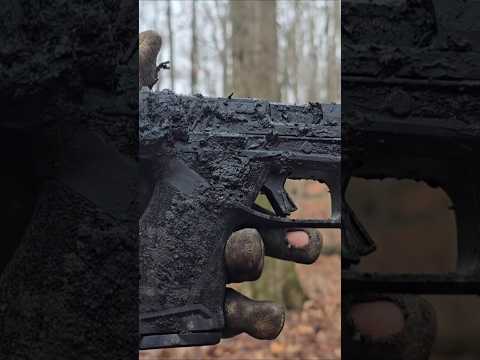
Mud Test: X95 Tavor

Published on March 21, 2017
Duration: 8:24

This guide details techniques for clearing common malfunctions, specifically mud-induced jams like stovepipes and double feeds, on the IWI X95 Tavor. It emphasizes the 'mortaring' technique for clearing a seized action and stresses the importance of function checks after clearing. The assessment highlights potential reliability issues due to open receiver slots in adverse conditions.


Quick Summary

The IWI X95 Tavor showed poor reliability in a mud test, suffering frequent stovepipe and double feed malfunctions due to mud entering open receiver slots. Clearing these jams often required the 'mortaring' technique, highlighting potential field reliability concerns in adverse conditions.

Chapters

  1. 00:00Introduction to X95 Tavor
  2. 00:53Mud Application Process
  3. 01:41Initial Malfunctions
  4. 03:15Clearing the Action (Mortaring)
  5. 04:29Secondary Testing and Failure
  6. 06:32Final Assessment

Frequently Asked Questions

How does the IWI X95 Tavor perform in a mud test?

The IWI X95 Tavor demonstrated significant reliability issues during a mud test, frequently experiencing stovepipe and double feed malfunctions due to mud entering the action through open receiver slots. Clearing these jams often required the 'mortaring' technique.

What is the 'mortaring' technique for clearing a jammed rifle?

Mortaring involves forcefully slamming the buttstock of a rifle against a hard surface. This inertia helps cycle the bolt rearward, potentially clearing obstructions like mud that have caused the action to seize, allowing the rifle to be reset.

What are the key specifications of the IWI X95 Tavor?

The IWI X95 Tavor features a 16.5-inch barrel, typically accepts 30-round magazines, and is chambered in 5.56x45mm NATO. Its weight is approximately 7.9 lbs, with an MSRP around $1,999.00.

What are the main vulnerabilities of the X95 Tavor highlighted in the mud test?

The primary vulnerability identified was the open design of the receiver slots, particularly around the charging handle and ejection port, which allowed significant mud ingress. This contamination led to critical malfunctions that were difficult to clear under field conditions.

Related News

All News →

More Tactical & Gear Videos You Might Like

More from InRangeTV

View all →