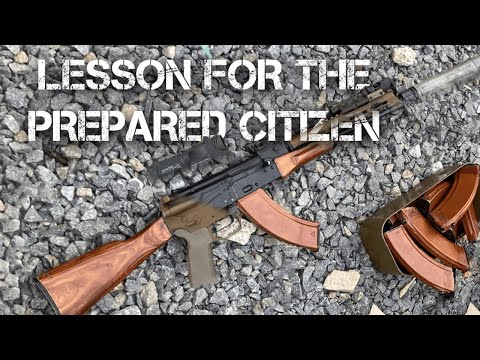
SHTF Preparedness Pyramid

Published on May 17, 2024
Duration: 19:27

This video introduces the SHTF Preparedness Pyramid, a framework for prioritizing survival needs from everyday financial stability to total societal collapse. It emphasizes focusing on more probable lower-level disruptions before extreme scenarios. The content highlights practical gear like the Venture Surplus TAP rig and discusses tactical considerations for various threat levels, including firearms like the B&T TP9.

Quick Summary

The SHTF Preparedness Pyramid prioritizes survival needs from 'Rule of Law' (financial stability) to 'Systemic Collapse'. It advises focusing on more probable lower-level disruptions like local power outages before preparing for extreme scenarios, ensuring efficient resource allocation.

Chapters

  1. 00:00Introduction to Preparedness Theory
  2. 01:23The SHTF Preparedness Pyramid Explained
  3. 03:35Level 1: Rule of Law Preparedness
  4. 04:45Level 2: Local Disruption Preparedness
  5. 07:05Level 3: Regional Disruption Preparedness
  6. 10:00Level 4: Systemic Degradation Preparedness
  7. 11:42Level 5: Systemic Collapse Preparedness

Frequently Asked Questions

What is the SHTF Preparedness Pyramid?

The SHTF Preparedness Pyramid is a model that categorizes survival scenarios from the base 'Rule of Law' (everyday life) to the peak 'Systemic Collapse' (total societal failure). It helps individuals prioritize their preparedness efforts and resources based on the likelihood and severity of potential disruptions.

What are the different levels of the SHTF Preparedness Pyramid?

The pyramid includes Level 1: Rule of Law (financial stability, basic skills), Level 2: Local Disruption (power outages, civil unrest), Level 3: Regional Disruption (infrastructure failure), Level 4: Systemic Degradation (loss of institutional legitimacy), and Level 5: Systemic Collapse (total societal failure).

Why is focusing on lower levels of the preparedness pyramid important?

Lower levels like 'Rule of Law' and 'Local Disruption' represent more probable events for most individuals. Addressing these first builds a strong foundation, making you better equipped to handle more extreme scenarios if they arise, rather than wasting resources on unlikely events.

What kind of gear is recommended for regional disruptions?

For regional disruptions where infrastructure fails long-term, preparedness requires more robust supplies (months of food/water), off-grid communication, and advanced tactical gear such as Personal Defense Weapons (PDWs) and night vision to counter potential threats.

Related News

All News →

More Tactical & Gear Videos You Might Like

More from Brass Facts

View all →