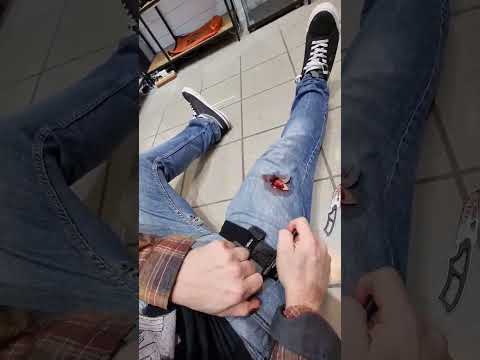
SICH tourniquet review & after-report

Published on May 7, 2020
Duration: 9:13

This video provides an after-report on the SICH tourniquet, detailing its performance after extreme testing including submersion, freezing, chopping out of ice, being driven over, and towing a car. The presenter discusses its features, potential downsides, and addresses viewer questions regarding its effectiveness and approval status.

Quick Summary

The SICH tourniquet underwent extreme testing, including submersion, freezing, being driven over, and towing a car. While its aluminum components offer excellent durability against temperature and blunt force, a key downside is the challenging one-handed windlass securing mechanism compared to other popular models.

Chapters

  1. 00:00Introduction & Test Recap
  2. 00:34Extreme Testing Details
  3. 01:08Post-Test Application & Assessment
  4. 01:39Tourniquet Sent for Further Testing
  5. 02:30Live Arm Test
  6. 03:05Arm Test Results
  7. 03:21Addressing Viewer Comments
  8. 03:31COTCCC Approval Status
  9. 04:25How the Tourniquet Was Discovered
  10. 04:55Positive Features of SICH Tourniquet
  11. 05:02Aluminum Components
  12. 05:27Design Emulation & Usability
  13. 06:22Rigid Triangle & Soft Side
  14. 07:18Downsides of SICH Tourniquet
  15. 07:27One-Handed Application Difficulty
  16. 08:27Concluding Remarks
  17. 08:43International Shipping Information

Frequently Asked Questions

What extreme tests was the SICH tourniquet subjected to?

The SICH tourniquet was submerged in water, frozen for three days, chopped out of ice, driven over twice, and used to tow a car. These tests were performed on the same unit to assess its durability and functionality under harsh conditions.

Is the SICH tourniquet COTCCC approved?

No, the SICH tourniquet is not COTCCC approved. As far as the reviewer knows, the Ukrainian-made tourniquet has never been submitted for evaluation by the US-based Committee on Tactical Combat Casualty Care.

What are the advantages of the SICH tourniquet's aluminum components?

The aluminum buckles and windlass of the SICH tourniquet offer significant advantages, including high resistance to extreme outside temperatures, blunt force damage, and UV light, contributing to its overall durability.

What is considered the main downside of the SICH tourniquet?

The primary downside identified is the difficulty in securing the windlass one-handed, especially under duress. This process requires manipulating a triangle, which can be more complicated than on tourniquets like the CAT.

Related News

All News →

More Tactical & Gear Videos You Might Like

More from Polenar Tactical

View all →