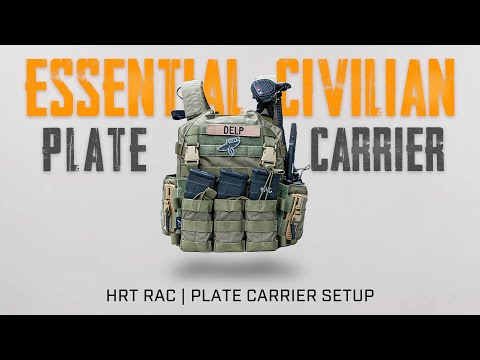
What Is A Realistic Civilian Plate Carrier Setup?

Published on December 17, 2024
Duration: 23:31

This guide details building a realistic civilian plate carrier setup, emphasizing modularity and mission adaptability. It covers selecting a carrier like the HRT RAC, choosing appropriate placards and armor plates (Ace Link Level IV), and integrating essential accessories such as medical kits and communication devices. The advice comes from a civilian perspective based on extensive gear testing.


Quick Summary

A realistic civilian plate carrier setup focuses on modularity and mission adaptability, featuring a carrier like the HRT RAC, a versatile placard system, Level IV armor plates, and essential medical gear (IFAK). It avoids excessive bulk to maintain mobility, with options for communication devices and appropriate headgear.

Chapters

  1. 00:00Introduction and Context
  2. 01:35HRT RAC Plate Carrier Overview
  3. 02:34Modularity and Placard Systems
  4. 04:56Front Panel: Maximus Placard
  5. 07:28Side Panels and Side Armor
  6. 09:28Back Panel and Quick Detach
  7. 11:59Armor Plates: Ace Link Level 4
  8. 14:11Medical and SOPs
  9. 18:04Helmets and Night Vision

Frequently Asked Questions

What is a realistic civilian plate carrier setup?

A realistic civilian plate carrier setup prioritizes modularity and mission adaptability. It includes a carrier like the HRT RAC, a versatile placard system, Level IV armor plates, essential medical gear (IFAK), and potentially communication devices, while avoiding excessive bulk that hinders mobility.

What are the key features of the HRT RAC Plate Carrier?

The HRT RAC Plate Carrier is noted for its durable 500D Nylon construction, water and heat resistance, and significant modularity. It utilizes a placard system for easy front panel swaps and features a 'Tubes' quick-detach system on the cummerbund for rapid emergency removal.

What type of armor plates are recommended for civilian use?

For civilian use, Level IV ceramic plates, such as those from Ace Link Armor, are recommended. These plates offer protection against armor-piercing rounds, are typically around 1 inch thick, and weigh approximately 5.7 lbs each.

Why is modularity important in a plate carrier setup?

Modularity is crucial as it allows a plate carrier to be adapted quickly to different tasks or threats. Using systems like placards enables users to swap out front panels to accommodate various weapon platforms (e.g., AR-15, shotgun) or mission needs efficiently.

More Tactical & Gear Videos You Might Like

More from ClassicFirearms

View all →