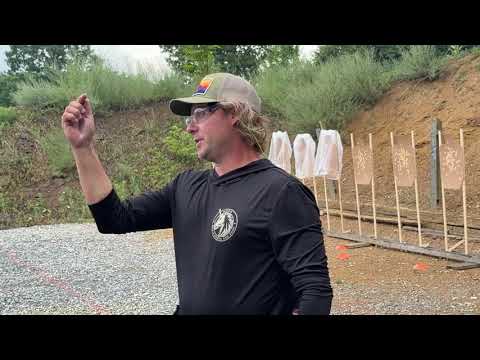
Ben Stoeger full class with Nick Young Dec 2025

Published on December 20, 2025
Duration: 110:19

This video provides advanced firearm training focused on recoil management and sight tracking. Instructor Ben Stoeger emphasizes the importance of 'input' – the muscular effort to control the firearm's movement after recoil – over grip alone. Drills cover aggressive shooting to identify breakdown points, one-handed shooting for isolation, and cadence shooting for rhythm. The core message is to focus on precise aiming points and consistent control rather than just speed.


Quick Summary

Ben Stoeger emphasizes that effective speed shooting relies on managing recoil through precise 'input' – the muscular effort to control the firearm's movement – rather than solely on grip pressure. Drills focus on returning sights to the target accurately after each shot, with techniques like cadence shooting and maintaining focus on the aiming point at distance.

Chapters

  1. 00:00Introduction to Marksmanship Fundamentals
  2. 00:32Shooting Pairs and Sight Return
  3. 01:51Grip vs. Input Demonstration
  4. 04:07Aggressive Shooting and Recoil Management
  5. 06:40Analyzing Target Breakdown Patterns
  6. 08:45Understanding Input Cues
  7. 10:13Wrist Lock and Grip Pressure
  8. 11:07Target Analysis: Lack of Vision
  9. 13:32Systematic Input Errors on Targets
  10. 15:16Trigger Control and Input Isolation Drills
  11. 17:49Live Fire: Input and Gun Return
  12. 19:12Shooting Pairs with Sight Return
  13. 20:30Grip Discussion: Connection and Consistency
  14. 22:05Loose Grip Philosophy
  15. 23:07Support Hand Grip and Thumb Position
  16. 24:46Goal: Consistent Gun Performance
  17. 26:45Close Range Shooting and Hand Relaxation
  18. 29:58Subtle Changes in Visual Presentation at Distance
  19. 31:33Sight Movement vs. Perception at Distance
  20. 33:36Maintaining Aggression Under Perceived Difficulty
  21. 34:41Occlusion Training Tool
  22. 35:57One-Handed Shooting Drill
  23. 38:08Stance and Body Positioning for Shooting
  24. 39:35Longer Range Shooting and Acceptable Outcomes
  25. 42:22Transition Drills: Awareness and Cues
  26. 45:02Transition Demo: Speed vs. Control
  27. 47:02Transition Mechanics: Eyes Lead Body
  28. 49:03Cadence Shooting for Rhythm and Transitions
  29. 53:35Effortless Fast Shooting Feel
  30. 54:13End State: Reacting to Sensation, Not Prescribed Speed
  31. 55:11Desired Shooting Feel: Low Effort and Floating
  32. 57:48Advanced Transitions: Bouncing Between Targets
  33. 59:04Appropriate Level of Confirmation for Targets
  34. 61:36Dry Fire Practice for Transitions
  35. 63:04Marksmanship Fundamentals: Aggressive A-Zone Engagement
  36. 64:29Sight as a Slashing Red Thing
  37. 66:36Connecting to the Sight Picture Before Shooting
  38. 68:09Tying Sight Picture to Trigger Press
  39. 69:03Tendencies at Different Distances
  40. 70:01Observing Shooter Demeanor

Frequently Asked Questions

What is the most important factor in speed shooting according to Ben Stoeger?

According to Ben Stoeger, the most important factor in speed shooting is managing recoil and applying correct 'input' to return the firearm's sights to the target. This muscular control is more critical than just grip pressure alone for achieving accurate follow-up shots.

How does recoil affect accuracy in firearms training?

Recoil significantly affects accuracy by moving the firearm's sights away from the point of aim. Proper technique involves applying 'input' to control this movement and return the sights quickly and precisely. Over-applying input can cause shots to go low, while under-applying can cause them to go high.

What is the purpose of cadence shooting drills?

Cadence shooting drills are used as a training tool to develop a consistent rhythm and feel for fast shooting. The focus is on the sound and tempo of the shots, helping shooters maintain control and a comfortable pace, rather than simply pulling the trigger as fast as possible.

Why is it important to focus on the aiming point rather than the sight's movement at distance?

At greater distances, focusing on the sight's movement can lead to inaccurate shots. It's more effective to maintain a fixed focus on the precise aiming point on the target and allow the sights to return naturally, resisting the urge to chase their movement.

More Training & Techniques Videos You Might Like

More from Ben Stoeger

View all →