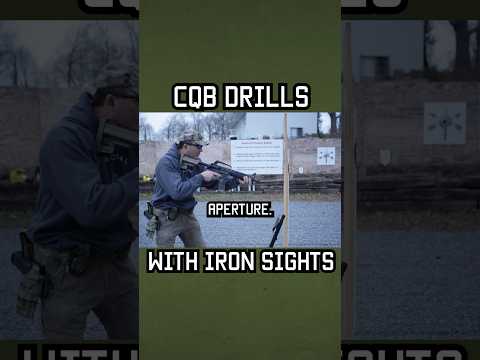
CQB Drills with Iron Sights | Tactical Rifleman

Published on March 22, 2019
Duration: 7:20

This expert-level guide from Retired USSSF Karl of Tactical Rifleman details effective techniques for using iron sights in Close Quarters Battle (CQB) scenarios. It emphasizes utilizing large apertures for situational awareness, maintaining a two-eyes-open shooting method, and employing faster acquisition techniques like looking over the rear sight. The guide also covers practical advice for optic failures and stresses the importance of proper ammunition selection for steel targets.

Quick Summary

For CQB with iron sights, utilize the large aperture for better situational awareness and maintain a two-eyes-open shooting posture. In case of optic failure, use the front sight post with the dead optic's window as a large aperture for rapid target re-acquisition.

Chapters

  1. 00:17Introduction: CQB with Iron Sights
  2. 00:45Historical Context: Pre-Red Dot Era
  3. 01:17Ammunition & Safety Notice
  4. 01:40Rear Sight Apertures: Large vs. Small
  5. 02:26Iron Sight Technique: Looking Through Large Aperture
  6. 02:46Iron Sight Technique: Looking Over Rear Sight
  7. 03:40Historical Use of Small Aperture (Stoner's Design)
  8. 05:03Optics Failure & Transition to Iron Sights
  9. 06:01Precision vs. Speed with Iron Sights
  10. 06:40Conclusion & Training Recommendation

Frequently Asked Questions

What is the primary advantage of using the large aperture on iron sights for CQB?

The large aperture on iron sights significantly enhances situational awareness in CQB by allowing the shooter to see more of their surroundings while still acquiring the front sight post, leading to faster target engagement.

How can you quickly re-acquire a target if your red dot optic fails during a CQB engagement?

If your optic fails, immediately use the front sight post and the optic's window as a large aperture to re-acquire your target rapidly. This allows for a quick return to engagement without needing to deploy backup sights.

Should you close one eye when shooting with iron sights in a gunfight?

No, closing one eye for accuracy with iron sights is impractical in a gunfight. Training should always simulate real-world conditions by shooting with both eyes open to maintain situational awareness and faster target acquisition.

What type of ammunition is recommended for shooting steel targets at close range?

For shooting steel targets at close range, especially under 50 meters, frangible ammunition is highly recommended. This type of ammunition is designed to break apart upon impact, significantly reducing the risk of dangerous ricochets.

Related News

All News →

More Training & Techniques Videos You Might Like

More from Tactical Rifleman

View all →