double action upside down 25m/27yds

Published on December 5, 2025
Duration: 0:47

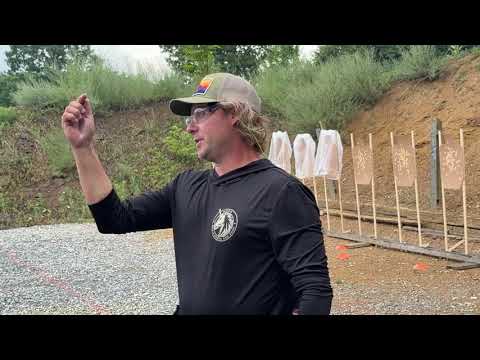
This guide details a technique for shooting a Smith & Wesson K-Frame revolver upside down in double action mode, as demonstrated by JaredAF. It covers understanding double action mechanics, adopting the stance, executing the shot, and managing potential light strikes. The challenge involves hitting an 8-inch steel plate at 25 meters. This advanced technique requires significant proficiency and safe handling practices.

Quick Summary

Learn to shoot a revolver upside down in double action mode at 25 meters. This advanced technique, demonstrated by JaredAF, focuses on managing the heavier double action trigger pull, maintaining sight alignment with an unconventional grip, and addressing potential light strikes. It requires significant practice and firearm control.

Chapters

  1. 00:00Introduction to Upside Down Shooting
  2. 00:04Double Action vs. Single Action Mechanics
  3. 00:24The Shooting Challenge
  4. 00:32Execution and Light Strikes

Frequently Asked Questions

What is the primary challenge of shooting a revolver upside down in double action?

The main challenge is managing the heavier and longer double action trigger pull while maintaining a stable, upside-down grip and sight alignment to hit a distant target accurately. Awareness of potential light strikes is also crucial.

How does double action differ from single action on a revolver?

In double action, a single trigger pull cocks the hammer and then releases it to fire. Single action requires manually cocking the hammer first, resulting in a lighter, shorter trigger pull solely for releasing the hammer.

What firearm is used in the demonstration of upside down double action shooting?

The video features a stainless steel Smith & Wesson K-Frame Revolver, chambered for .357 Magnum / .38 Special, with a 6-round capacity.

What are potential issues when shooting a revolver in double action, especially unconventionally?

A common issue is experiencing 'light strikes,' where the primer isn't fully ignited. This often requires a second trigger pull to resolve, as demonstrated in the video.

More Training & Techniques Videos You Might Like

More from JaredAF

View all β†’