Channel: @patmcnamara
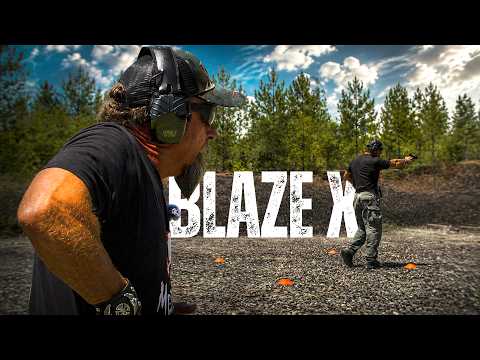
The Blaze X shooting drill, as demonstrated by Pat Mac, is a dynamic course of fire designed to improve shooting proficiency from multiple positions and with different hand configurations. It requires starting and finishing in the center, engaging targets with two hands from the middle, and using only the strong hand when positioned to the left or right. The drill emphasizes returning to the center between each firing position and encourages efficient movement, with the hint in the name suggesting cutting corners to maintain momentum.
This video demonstrates a dynamic shooting drill designed to break shooters out of a 'flat range mindset' and improve their ability to move and shoot effectively. Instructor Pat Mac emphasizes the importance of a compressed ready position, dynamic footwork, and not relying on a static stance, which is not a fundamental of fighting pistol marksmanship. The drill incorporates elements of calling shots and progressive training, moving from slow, deliberate practice to timed runs to build proficiency.
This video details 'The Grinder' shooting drill, designed to test shooter efficiency and decision-making under pressure. The drill requires engaging six targets three times each, with a maximum of two shots allowed per firing position. It emphasizes smooth movement and strategic planning to compensate for misses, encouraging shooters to avoid overthinking and focus on efficient execution. Instruction is provided by Pat Mac, highlighting practical application for improving firearm skills.
This video demonstrates timed fire drills focusing on strong-hand-only shooting from the holster. The instructor emphasizes accuracy within set time limits (30 seconds for five rounds, then 15 seconds) and provides a scoring method. A pro tip on target taping is also shared.
This video focuses on refining the TAC reload technique for firearms, emphasizing smoothness and consistency over speed. The instructor highlights the importance of maintaining sight alignment and ensuring accurate follow-up shots after a reload. It also touches upon shooting support-hand only when cover dictates and the critical rule of retaining partially-full magazines.
This video emphasizes the importance of allowing oneself to fail during firearms training, particularly in a class setting. Instructor Pat Mac explains that self-critique should be viewed as an adjustment rather than self-condemnation. He grants permission to fail, provided it's not a recurring issue, to help students work within their capabilities and improve their skill set.
This video demonstrates a "compressed ready" stance for movement, keeping the firearm tight and safe. It also illustrates a shooting technique where the gun is brought up high, fired, and then transitioned to a "high ready" before pushing out to the target while moving. The instructor emphasizes the importance of timing and progressive training, noting a slow first shot due to a bad grip and a new holster.
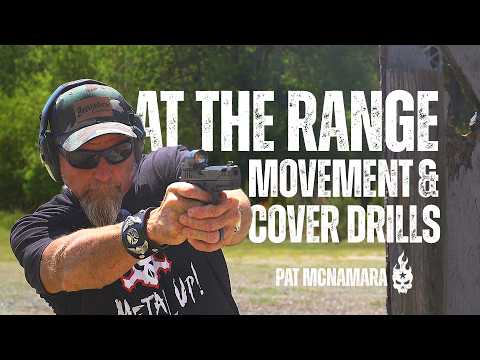
This video provides expert instruction on tactical reloads and the effective use of cover, emphasizing the importance of smooth, deliberate movements and maintaining situational awareness. Instructor Pat McNamara details the mechanics of a tactical reload, distinguishing it from a speed reload, and stresses the need to avoid predictability when repositioning after a reload. The content also covers movement drills, focusing on footwork, proprioception, and utilizing peripheral vision, while debunking the notion of a universal 'stance' in dynamic shooting scenarios.
This video emphasizes the critical role of body movement and footwork in shooting. Instructor Pat Mac advocates for incorporating 'dance steps' and moving drills on the range, likening effective movement to that of a 'jungle cat' or 'greased butter.' He stresses the importance of proprioception and kinesthetic awareness, urging shooters to develop smooth footing and a strong sense of their body in space, especially when transitioning between cover. The instruction highlights that good physical conditioning directly impacts shooting performance and survivability.
This video provides a practical training drill using reactive targets, emphasizing the importance of maintaining sight alignment and trigger control to avoid common shooting errors. Instructor Pat Mac highlights how reactive targets can trick shooters into looking away from their sights, leading to misses. The drill focuses on staying on target, minimizing trigger finger movement, and recovering quickly from misses to improve overall accuracy and speed.
This video details the tactical reload (tack reload) technique, differentiating it from a speed reload. A tack reload is performed during a lull in the fight, often behind cover, and emphasizes retaining the empty magazine by stowing it in a pocket. The process involves entering a workspace, grabbing the new magazine, dropping the old one, switching, inserting, and stowing.
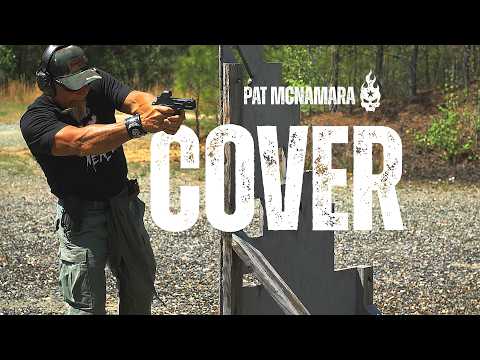
This video emphasizes the tactical use of cover, likening it to terrain that should be leveraged dynamically rather than being a static defensive position. The instructor, Pat Mac, advises against prolonged concealment, highlighting the risks of being flanked. He demonstrates how to use cover, such as a car hood, to create a stable shooting platform for accurate fire, stressing the importance of muzzle awareness and trigger discipline.