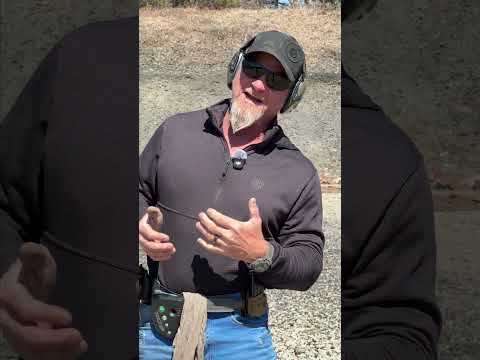
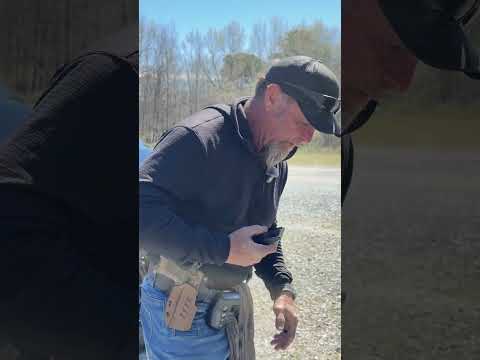
“My first shot was slow.”

Published on May 7, 2026
Duration: 1:15

This video demonstrates a "compressed ready" stance for movement, keeping the firearm tight and safe. It also illustrates a shooting technique where the gun is brought up high, fired, and then transitioned to a "high ready" before pushing out to the target while moving. The instructor emphasizes the importance of timing and progressive training, noting a slow first shot due to a bad grip and a new holster.


Quick Summary

Learn effective pistol shooting techniques including the 'compressed ready' for safe movement and a 'high ready' transition after firing. A slow first shot can result from a bad grip, especially with a new holster. Progressive, systematic training is key to improving firearm proficiency.

Chapters

  1. 00:01Compressed Ready for Movement
  2. 00:13Shooting Technique: High Ready Transition
  3. 00:24Importance of Timed Training
  4. 01:01Analysis of Slow First Shot

Frequently Asked Questions

What is a 'compressed ready' in firearm handling?

A compressed ready is a firearm retention and movement position where the weapon is held close to the body in a tight, compact configuration. This allows for safe movement without accidentally covering yourself or others, ensuring better control and safety during dynamic situations.

How does the instructor suggest transitioning after firing a shot?

The instructor demonstrates a technique where after firing, the firearm is brought into a 'high ready' position. From this high ready, the shooter then pushes the firearm out towards the target as they move into their desired position, emphasizing a smooth transition.

What can cause a slow first shot when shooting a pistol?

A slow first shot can often be attributed to a poor grip on the pistol. This might include gripping the firearm too high, which can affect control and the speed of your initial engagement. Practicing proper grip is crucial for consistent performance.

Why is progressive training important in firearms instruction?

Progressive training is vital because it ensures that learning is comprehensive and systematic. By showing progression, individuals can build upon foundational skills, leading to more effective and reliable performance under pressure. Without timing and progression, concepts are harder to solidify.

More Training & Techniques Videos You Might Like

More from Pat Mac

View all →