Channel: @achillesheeltactical
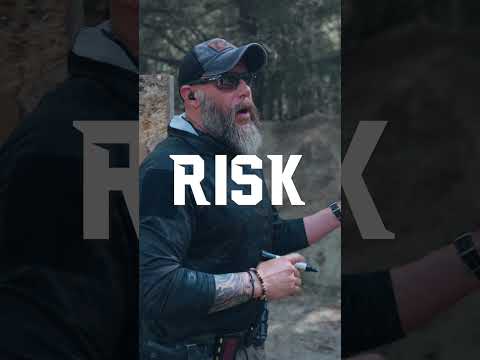
This video emphasizes that effective shooting is a balance between speed and accuracy, not a competition between them. The core principle is that this balance hinges on the shooter's assessment of risk, which is influenced by objective factors like target size, distance, movement, and foreground/background considerations. It also highlights the critical importance of considering the consequences of a missed opportunity, particularly in high-stakes scenarios like active shooter events.
The Man Card Drill, developed by Achilles Heel Tactical, is a performance-on-demand standard designed to test fundamental marksmanship skills under time pressure. It consists of five iterations involving pistol and rifle engagements from various ready positions, culminating in a transition drill. The drill emphasizes accuracy and speed, providing an unbiased metric of a shooter's capabilities. While not a definitive measure of overall shooting skill, it serves as a rigorous test of fundamental execution.
David Acosta of Achilles Heel Tactical demonstrates the Defensive Pistol Cold Start Drill, a diagnostic tool for assessing shooting proficiency. The drill emphasizes single-handed draw strokes from concealment and is scored using a hit factor. It incorporates various starting positions, including 180-degree turns, and integrates garment clears to simulate real-world defensive scenarios.
This video demonstrates the 'Man Card Drill,' a firearms training exercise focused on drawing from a holster and engaging a target within a strict time limit. The drill, presented by Achilles Heel Tactical, emphasizes performing under pressure and on demand, with participants 'losing their man card' if they miss or exceed the time. The instructor highlights the importance of pressure testing skills for real-world scenarios and competitive shooting.
This video from Achilles Heel Tactical focuses on 'overdeveloping your index' through a precision shooting drill. The instructor emphasizes drawing the firearm and stopping it on a small, 1-inch black paster with a target reaction time of 0.8 seconds. The goal is to build extreme precision in the draw stroke and sight alignment, enabling faster and more accurate shots when a larger target like an A-zone is presented. The drill pushes shooters to their limits to enhance hand speed and efficiency, even if it means not achieving a perfect 'stop dot' at faster speeds.
This video segment focuses on the concept of 'visual anchoring' in pistol shooting. The instructor emphasizes achieving an intense focus on the target, making peripheral details in the 'A zone' non-existent. This allows the shooter to process the situation, determine the necessity of a shot, and then prioritize speed and accuracy in delivering the bullet to the target.
This drill, developed by Nick Young of Vlocks Training Group and demonstrated by Paul Costa of Achilles Heel Tactical, focuses on shooting out of and into a position while managing a visual barrier. The core technique involves prioritizing engagement of the target that will be obscured first, transitioning vision through the barrier, and maintaining aggressive movement to save time. The drill emphasizes blending targets and using confirmation levels for efficient engagement.
This video emphasizes the importance of 'greedy eyes' in dynamic shooting. The instructor advises against bringing the firearm down between shots, advocating for continuous visual acquisition and driving vision through the intended target area. The goal is to maintain a consistent shooting platform and flow through multiple positions without unnecessary gun manipulation.
This video emphasizes a training philosophy centered on deliberately operating within an 'uncomfortable band' to build consistent, on-demand firearms performance. Instructor from Achilles Heel Tactical highlights the importance of achieving a specific metric reliably (e.g., 8/10) before increasing difficulty, and then consciously linking successful execution cues to subconscious recall for mastery.
This video provides a comprehensive training regimen designed for effective firearm practice using 100 rounds or less. Instructor Rick from Achilles Heel Tactical demonstrates several drills focusing on trigger control, grip consistency, shot calling, and movement. The techniques emphasize building self-awareness and understanding cause-and-effect relationships behind the gun, suitable for shooters looking to develop fundamental skills.
This video, from Achilles Heel Tactical, provides advanced instruction on a critical shooting technique: engaging targets effectively with less visual information. The expert instructor emphasizes that in high-stress, close-quarters situations, minimal sight picture is needed for accurate hits. The core principle is to develop fundamental skills and structure to shoot faster and gain an advantage by introducing the firearm proactively, rather than solely reacting to threats. This technique is crucial for law enforcement and self-defense scenarios where time is critical.
This video from Achilles Heel Tactical provides expert instruction on achieving the correct pistol shooting posture. The instructor, demonstrating expert authority, explains how leaning back compromises balance and force transfer, often stemming from habits learned in other firearms disciplines. The guide emphasizes moving the chest forward over the belt line for improved structure and control.