This video emphasizes the importance of tailored feedback in skill development, particularly in firearms training. The speaker, Pat Mac, advocates for understanding individual learning styles and emotional resilience when providing corrections. He suggests a preemptive approach to address potential sensitivities and encourages self-correction as a vital learning tool, even calling himself out for mistakes to illustrate the process.
This video discusses the perceived high cost of long-range firearms training, estimating that in-person classes can cost around $2,000 when factoring in travel, accommodation, food, and ammunition. It proposes online training as a more affordable alternative, potentially costing around $100 per month, to cover the theoretical aspects of shooting.
This video emphasizes a structured approach to firearms training, differentiating the roles of dry fire, live fire practice, and competition matches. Lead Firearms Instructor Joel Park advises that dry fire is crucial for skill building, live fire for validation and observation, and matches for performance testing under pressure. He cautions against trying to learn new skills or significantly increase speed during competitions, as the added pressure and distractions make it an ineffective environment for skill acquisition.
This video addresses a common dry fire training challenge: assessing the effectiveness of target transitions without live fire feedback. The instructor emphasizes focusing on the smooth 'floating' of sights to the target and the impact of trigger press on sight stability. He advises that dry fire builds habits, and live fire is crucial for validating them, recommending a balanced approach to trigger press during dry fire drills.
This video offers a comprehensive approach to improving shooting skills, emphasizing a long-term, varied training strategy over specific round counts or arbitrary goals. The instructor, drawing from personal experience, advocates for consistent practice, aggressive information seeking, and a balanced development of multiple shooting disciplines. Key takeaways include the importance of observing performance, targeted dry-fire practice, and the value of professional instruction for breaking through plateaus.
This video emphasizes a training philosophy centered on deliberately operating within an 'uncomfortable band' to build consistent, on-demand firearms performance. Instructor from Achilles Heel Tactical highlights the importance of achieving a specific metric reliably (e.g., 8/10) before increasing difficulty, and then consciously linking successful execution cues to subconscious recall for mastery.
This video emphasizes that mastery in any high-stakes field, particularly tactical operations, is a continuous journey, not a destination. GBRS Group instructors highlight that ego is the primary obstacle to growth, and true professionals actively seek out those superior to them to learn and adapt their methods. The core message is that there is 'no finish line' to skill development.
Joel Park, an experienced shooter, advises on developing new shooting skills while mitigating bad habits. He emphasizes that some initial errors are inevitable and part of the learning process. Park suggests focusing on holistic skill development rather than over-analyzing single aspects, and seeking formal instruction when plateaus are reached or specific guidance is needed. The key is consistent practice and adaptation, with foundational experience enhancing the benefits of training.
This guide, based on insights from firearms instructor Joel Park, emphasizes a process-focused approach to shooting practice over an outcome-focused one. Park, an expert with extensive experience, details how fixating on split times or scores can hinder progress. He advocates for analyzing the mechanics of each shot, grip, sight alignment, and recoil management to achieve true skill development. This method is crucial for improving performance in drills like the Bill Drill and Doubles Drill, ultimately leading to more consistent and effective shooting.
This entry synthesizes Ben Stoeger's insights on standard shooting tests, emphasizing their role as tools for individual skill development rather than mere reward systems. Stoeger, an expert instructor, details the components of these tests, including position changes and complex engagement orders, explaining their purpose in preparing shooters for practical scenarios. He highlights performance expectations and differentiates competition shooting from real-world applications, stressing safety and effective practice as key for class participation.
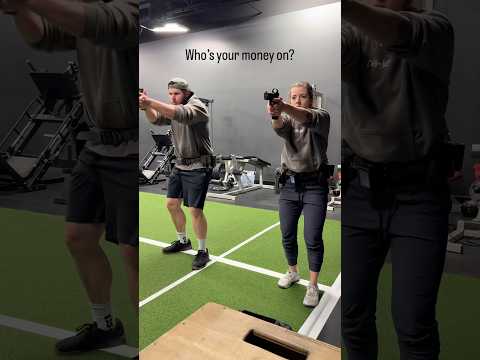
This video demonstrates a synchronized dry fire training drill featuring two individuals practicing fundamental firearm handling skills. The participants, using Glock-style training pistols, execute draws from holsters and simulate magazine reloads. The drill highlights the use of both red dot sights and traditional iron sights, showcasing different aiming methodologies in a controlled environment.
This video emphasizes the importance of being a 'Prepared Citizen' in the current era. It highlights the necessity of constant training and skill development for readiness, advocating for individuals to be valuable assets rather than liabilities. The content features individuals in tactical gear demonstrating preparedness in a woodland setting.
Gun Laws by State
Read firearms regulations for all 50 states + D.C.
Find Gun Dealers
Search licensed FFL dealers near you.