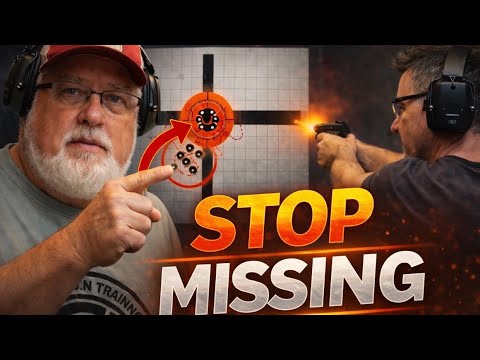
FOUR SHOOTING MISTAKES | Shooting Technique Lessons Learned

Published on July 16, 2021
Duration: 7:24

This video offers insights from a shooter's personal journey, detailing four key mistakes and their corrections. It covers adjusting arm positioning to avoid elbow hyperextension and pain, refining grip to prevent slide bite and ensure consistency, the importance of paper targets for accuracy assessment over solely steel, and streamlining the drawing pattern for greater efficiency. The advice is geared towards beginners seeking to improve their shooting fundamentals.

Quick Summary

Avoid common shooting mistakes by adjusting arm positioning to roll elbows outward, improving grip by keeping thumbs indexed high to prevent slide bite, using paper targets to verify accuracy beyond steel hits, and streamlining your drawing pattern to minimize inefficient movements.

Chapters

  1. 00:00Introduction
  2. 00:15Mistake 1: Arm Positioning
  3. 01:51Corrected Arm Positioning
  4. 02:27Mistake 2: Grip
  5. 03:02Understanding Slide Bite
  6. 03:40Corrected Grip Technique
  7. 04:34Mistake 3: Target Choice
  8. 05:21Mistake 4: Drawing Pattern
  9. 05:57Ongoing Improvement
  10. 06:17Conclusion & Takeaways

Frequently Asked Questions

What is a common mistake shooters make with their arm positioning?

A frequent mistake is locking out the elbows completely while shooting. This can cause pain, especially for individuals with hypermobile joints, as the joints end up absorbing all the recoil instead of the muscles.

How can a shooter improve their grip to avoid slide bite?

To avoid slide bite, ensure your hand is positioned below the beaver tail. Gripping higher on the firearm and keeping your thumb indexed straight can provide a more consistent and secure grip, preventing the slide from catching your skin.

Why is shooting only on steel targets potentially problematic for accuracy?

While steel targets are fun and provide immediate feedback, they can be misleading. They confirm a hit but don't reveal the precise location of the bullet impact, potentially masking inaccuracies that paper targets would clearly show.

What makes a drawing pattern inefficient?

An inefficient drawing pattern involves excessive and unnecessary movements, such as large shoulder or body shifts, pressing out too far, or dipping the head. These actions waste time and energy, making the draw slower and less effective.

More Training & Techniques Videos You Might Like

More from Tessah Booth

View all →