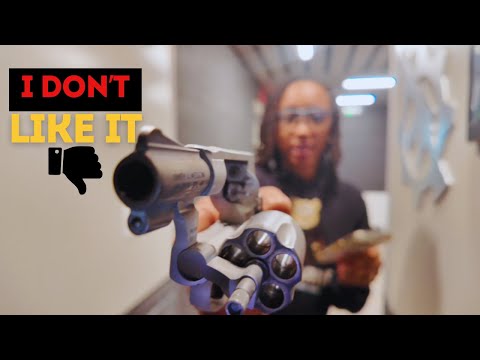
Handgun Actions | Single Action Vs. Double Action Firearms: Plus Bonus Info

Published on February 10, 2018
Duration: 5:11

This video explains the fundamental differences between double-action and single-action firearm mechanisms, focusing on the number of jobs the trigger performs. It details how double-action triggers perform both cocking and releasing the hammer, resulting in a longer and heavier pull, while single-action triggers only release a pre-cocked hammer, offering a shorter and lighter pull. The explanation extends to striker-fired firearms, clarifying the 'double-action only' classification.

Quick Summary

The key difference between double-action and single-action firearms is the trigger's function. Double-action triggers cock and release the hammer/striker in one pull, leading to a longer, heavier pull. Single-action triggers only release a pre-cocked hammer/striker, resulting in a shorter, lighter pull that aids accuracy.

Chapters

  1. 00:00Introduction: Double vs Single Action
  2. 00:13Geauga Firearms Academy Intro
  3. 00:22Revolver Example: Double Action
  4. 00:33Double Action Trigger Jobs: Cocking & Releasing
  5. 00:50Double Action Trigger Travel & Weight
  6. 01:04Revolver Example: Single Action
  7. 01:11Single Action Trigger: Reduced Travel
  8. 01:27Double Action Characteristics: Heavy Trigger
  9. 01:40Single Action Trigger: Light Pull
  10. 01:47Shooting Skills: Double Action vs Single Action
  11. 02:10Pistol Example: Single Action Only (SAO)
  12. 02:23SAO Trigger Function: Hammer Release Only
  13. 02:44Majority of Pistols are Single Action
  14. 02:56Technical Details: Double Action Pistols
  15. 03:00SIG P250 Example
  16. 03:15True Single Action Striker-Fired (DAO)
  17. 03:36Why 'Double Action Only' for Striker-Fired?
  18. 04:02Practicality of DAO vs. True Single Action
  19. 04:17Summary: Jobs of the Trigger
  20. 04:24Video Conclusion & Call to Action

Frequently Asked Questions

What is the main difference between double-action and single-action firearms?

The primary difference lies in the number of jobs the trigger performs. A double-action trigger cocks and releases the hammer/striker in one pull, resulting in a longer, heavier pull. A single-action trigger only releases a pre-cocked hammer/striker, offering a shorter, lighter pull.

How does trigger pull weight and travel differ between double-action and single-action triggers?

Double-action triggers are typically heavier (e.g., 12 lbs) and have significantly longer travel (e.g., an inch or more). Single-action triggers are much lighter and have drastically reduced travel, often by 90%, making them easier to manage for accuracy.

Are all striker-fired pistols double-action?

Not necessarily. While many striker-fired pistols are classified as 'Double Action Only' (DAO) because the trigger pull partially cocks and fully releases the striker, their practical function can be similar to single-action if the striker fails to fire and cannot be re-struck.

Which type of trigger action is generally better for accuracy?

Single-action triggers are generally considered better for accuracy due to their shorter travel and lighter pull weight. This minimizes disturbance to the firearm's sights during the shot, making it easier to maintain a precise sight picture.

Related News

All News →

More Training & Techniques Videos You Might Like

More from Geauga Firearms Academy

View all →