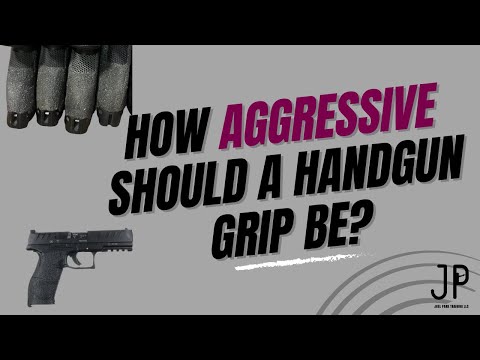
Handgun grip for dummies

Published on March 16, 2025
Duration: 11:24

This guide details a handgun grip technique emphasizing high hand placement on the beavertail and maximizing frame contact with the support hand. It highlights the importance of differential grip pressures: firm but not death-gripping with the firing hand, and a strong grip with the support hand for recoil management. The video also suggests using the first joint of the trigger finger for better leverage and recommends recording practice sessions to analyze grip consistency.


Quick Summary

For the firing hand, grip the handgun firmly enough to maintain control but not as hard as possible. The pressure should be relaxed enough that you could, for example, lift your middle finger off the frame. This prevents excessive tension that can negatively impact trigger pull. The support hand should grip with significant pressure, nearly a death grip, to ensure it moves with the gun during recoil.

Chapters

  1. 00:01Introduction: Handgun Grip for Dummies
  2. 00:28Firing Hand Placement
  3. 00:51Support Hand Placement
  4. 01:38Maximizing Frame Contact
  5. 02:06Grip Size and Fit
  6. 03:03Grip Pressures Explained
  7. 03:13Firing Hand Pressure
  8. 04:14Support Hand Pressure
  9. 05:52Why Different Pressures?
  10. 06:09Recoil Control Demonstration
  11. 07:01Trigger Finger Positioning
  12. 08:05Grip Assessment Drill: Doubles
  13. 08:14Recording Your Grip
  14. 09:31Analyzing Slow-Motion Footage
  15. 10:07Recap: Grip for Dummies

Frequently Asked Questions

What is the recommended grip pressure for the firing hand on a handgun?

For the firing hand, grip the handgun firmly enough to maintain control but not as hard as possible. The pressure should be relaxed enough that you could, for example, lift your middle finger off the frame. This prevents excessive tension that can negatively impact trigger pull.

How should the support hand grip a handgun for optimal recoil control?

The support hand should grip the handgun with significant pressure, nearly a death grip, but not to the point of shaking. This firm grip ensures the entire hand unit moves with the gun during recoil, allowing the support hand to manage the majority of the recoil force.

Where should the trigger finger be placed for better leverage?

For better leverage and a straighter trigger pull, especially on double-action or stock striker-fired pistols, place the first joint of your trigger finger on the trigger. This provides more control compared to using the pad or whirl of the fingerprint.

What is the 'doubles drill' for assessing handgun grip?

The 'doubles drill' involves firing a fast pair of shots, letting the gun settle, then firing another fast pair, repeating for eight shots. Recording this drill allows you to analyze your grip consistency and how the gun behaves during recoil.

Related News

All News →

More Training & Techniques Videos You Might Like

More from Joel Park

View all →