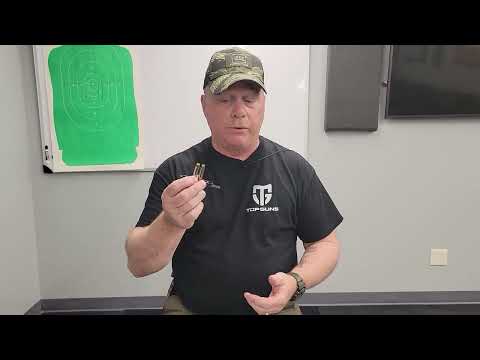
How to Choose the Right Gun: Revolvers vs. Semi-Autos and Women

Published on March 27, 2020
Duration: 13:07

Instructor Mike discusses the practical considerations of choosing between revolvers and semi-automatic firearms, particularly for women, emphasizing the impact of stress on performance. He highlights the challenges of recoil management with short-barreled revolvers, the limitations of low round capacity, and the difficulties of reloading under duress without speedloaders. The instructor stresses the importance of training for human performance under stress, focusing on gross motor skills and big-picture threat assessment rather than precise aiming at paper targets.

Quick Summary

Instructor Mike explains that revolvers, while useful, present challenges for self-defense due to recoil, limited capacity, and difficult reloading under stress. He stresses that training should focus on gross motor skills and big-picture threat assessment, as stress impairs fine motor skills, making complex actions like precise reloading difficult. The goal is to stop the threat, not to aim for perfect paper targets.

Chapters

  1. 00:00Introduction: Smith & Wesson Bodyguard
  2. 00:34Revolver Recoil and Felt Recoil
  3. 02:04Revolver Capacity and Reloading Challenges
  4. 02:30The Importance of Speedloaders
  5. 03:51Reloading Under Stress
  6. 05:07Understanding Firearm Complexities
  7. 05:45Introduction to Ballistics
  8. 06:46Terminal Ballistics and Human Response
  9. 07:16Adrenaline and Pain Perception
  10. 07:53Revolver Limitations in Combat
  11. 08:11Training vs. TV: Threat Assessment
  12. 09:46Focusing on the Big Picture
  13. 10:23Gross Motor Skills Under Stress
  14. 10:41Reloading Multiple Times
  15. 11:20Revolver as a Primary Firearm?
  16. 12:10Stop Recommending Revolvers Blindly
  17. 12:45Conclusion: Revolvers Have a Place

Frequently Asked Questions

What are the main drawbacks of revolvers for self-defense, according to Instructor Mike?

Instructor Mike highlights that revolvers, especially short-barreled ones, can have significant felt recoil. Their limited capacity (often five rounds) is a tactical disadvantage, and reloading under stress without speedloaders is difficult and time-consuming, potentially leading to dropped rounds and a reduced ability to stop a threat.

How does stress affect firearm performance, particularly with revolvers?

Under stress, fine motor skills degrade, making precise actions like reloading a revolver cylinder challenging. This can lead to fumbling with rounds or speedloaders. Instructor Mike emphasizes that training should focus on gross motor skills and big-picture threat assessment, as complex tasks become difficult when the reptilian brain takes over.

Why is focusing on paper targets during training not ideal for self-defense?

Instructor Mike argues that in a real-life threat, you won't have time to look at paper targets for bullet holes. The focus must be on the 'big picture' – the threat's actions and physical presence. Observing if the threat stops moving or falls is the critical indicator, not the precise location of a bullet hole.

What is terminal ballistics and why is it important for self-defense?

Terminal ballistics is the study of what happens when a bullet impacts a target, specifically its effect on the body. For self-defense, understanding terminal ballistics helps explain the potential outcomes of a gunshot and the body's reaction to it, which is crucial for assessing threat cessation.

Related News

All News →

More Training & Techniques Videos You Might Like

More from Instructor Mike

View all →