This video from GBRS Group explains the ballistic principles of deviation and deflection. Deviation is defined as a projectile passing through an object, while deflection is a contact that disrupts or changes trajectory. The demonstration uses 5.56x45mm rounds impacting pillars to illustrate these concepts, showing how fragments can cause minor disruption without lethal effect.
This video conducts a ballistic gel test comparing two .38 Super self-defense ammunition types: Colt Defense (DoubleTap) 124gr JHP and Lehigh Defense 115gr Controlled Fracturing. The test, performed from a Colt Gold Cup National Match 1911, reveals significant differences in terminal performance. The Colt ammunition failed to expand, tumbling and exiting the gel block with no expansion, while the Lehigh ammunition fractured as designed, with its fragments and core achieving substantial penetration and spread.
This video explores the terminal ballistics of 9x19mm ammunition by firing rounds into a catalog. The experiment compares a full metal jacket (FMJ) round with a lead-core bullet to a pure lead bullet with an antimony core. The results demonstrate the penetration capabilities of 9mm rounds through paper and the deformation characteristics of different bullet types upon impact with a hard surface.
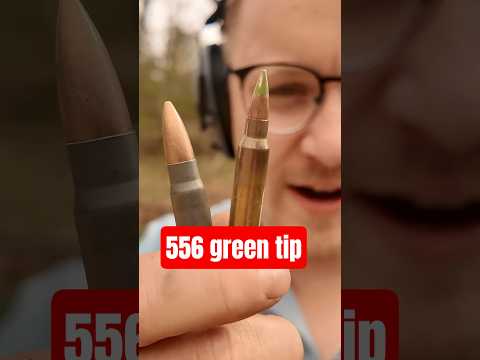
This video provides a detailed comparison of several 5.56x45mm NATO ammunition types used by the US Navy, focusing on their terminal ballistics and penetration capabilities. The Mark 255 Mod 1, featuring a compressed copper polymer core, is highlighted for its rapid fragmentation and potential for large wound channels, while the M855A1 is noted for its extreme penetration. The M855 Green Tip and Mark 262 Mod 1 are also tested for comparison.
Geoff Nemnich discusses his choice of the .22 ARC cartridge for coyote hunting as an upgrade from the .223 Remington. He highlights the .22 ARC's superior ballistics, increased muzzle velocity, and enhanced downrange performance. Nemnich also praises the terminal performance of Hornady's ELD-VT ammunition, noting its impressive expansion and devastating effect on coyotes, even at extended ranges.
This video, presented by Ted from Line45, details the shift in hunting ammunition preferences away from traditional soft points towards modern bonded and tipped loads. It highlights specific ammunition lines like Hornady Precision Hunter ELD-X, Federal Premium Terminal Ascent, Barnes Vor-TX TTSX, Nosler Trophy Grade AccuBond, Hornady American Whitetail InterLock, and Federal Fusion, explaining their advantages in terminal ballistics, expansion consistency, and penetration across various hunting scenarios and distances. The presenter emphasizes that these modern options offer greater confidence and reliability for today's hunters facing longer shots and varied game.
This video compares the terminal ballistics of 5.56x45mm NATO (M855 Green Tip) and 7.62x39mm (Tula) ammunition using gel block testing. The 5.56mm round demonstrated significant expansion and fragmentation, causing substantial damage to the test setup. The 7.62x39mm round, while also expanding, showed greater penetration, passing through the gel block and the table. The test highlights the different performance characteristics of these popular calibers in terms of tissue damage and penetration.
This video from Brownells, featuring Caleb, provides a ballistic comparison of Hornady Critical Defense .223 Remington ammunition against standard 55-grain Full Metal Jacket (FMJ) rounds. The testing, conducted at Big Spring Shooting Complex using ballistic gel, highlights the superior terminal performance of the Critical Defense round, demonstrating a significantly larger and more effective wound channel. The presenter argues for its value in self-defense scenarios due to its rapid energy dump and stopping power on unarmored targets, contrasting it with the over-penetration and minimal damage potential of FMJ rounds.
This gel block test compares the terminal ballistics of 5.56x45mm NATO M855 Green Tip and 7.62x39mm Tula ammunition. The 5.56mm round demonstrated significant expansion and tumbling, while the 7.62x39mm round showed similar width expansion but greater length and penetration. The test highlights the distinct terminal effects of these common rifle calibers.
The speaker re-evaluates the Pistol Caliber Carbine (PCC) as a primary rifle choice, concluding that for scenarios requiring engagement beyond close quarters, or where barrier penetration and terminal ballistics are critical, a rifle caliber platform is superior. He emphasizes the need for a rifle's ballistic performance and ability to defeat barriers, especially when considering family safety in uncertain environments.
This video from Ballistics Lab compares the terminal performance of Hornady's 147-grain ELD-M (Match) and ELD-X (Hunting) bullets in 6.5 Creedmoor fired through ballistic gel after impacting wood. The ELD-M showed rapid expansion and significant tissue damage, while the ELD-X created a larger wound channel but deviated from its path. The presenter suggests both can be effective for deer hunting if the hunter understands their specific performance characteristics.
This video demonstrates an experimental modification of a 12-gauge shotgun shell, replacing birdshot with thousands of bobby pins. Through a three-part test involving water jugs, cardboard targets, and ballistic gelatin, the effectiveness and lethality of this improvised projectile are evaluated. The results indicate significant energy transfer, wide pattern spread, and penetration capabilities, suggesting the bobby pin shell is 'certified deadly'.
Gun Laws by State
Read firearms regulations for all 50 states + D.C.
Find Gun Dealers
Search licensed FFL dealers near you.