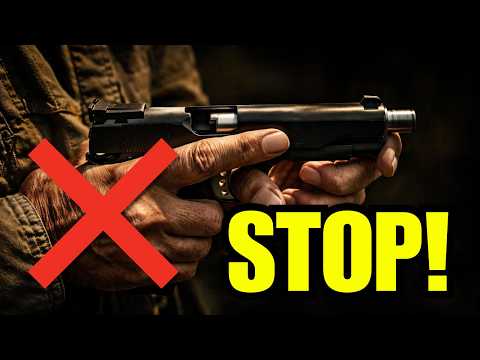
This video explores the growing trend of shooters replacing 9mm with alternative handgun calibers in 2025 and beyond. The presenter, Ted from Line 45, details the advantages of calibers like .30 Super Carry for capacity, 5.7x28mm for speed and flat trajectory, 10mm for power, .357 SIG for barrier penetration, and .22 TCM for rifle-like velocity in a pistol platform. The discussion highlights how these newer options address specific needs that 9mm may not always meet, driven by advancements in ammunition and firearm design.
This video details a lot-to-lot consistency test of Fiocchi 55gr M193 ammunition. The instructor found significant variations in accuracy and velocity between different lots, impacting performance. Testing was conducted at 100 yards using two different AR-15 barrels, a 20-inch Bear Creek Arsenal HBAR and a 14.5-inch Hodge barrel, with data collected via a Garmin chronograph and Mantis X10.
This guide details how to test propellant temperature sensitivity, a crucial factor for consistent long-range accuracy. It emphasizes using a reliable chronograph and testing ammunition across a wide temperature range, from cold to hot conditions. The process involves calculating the muzzle velocity change per degree Fahrenheit to understand how temperature fluctuations affect performance, enabling shooters to account for these variations in their ballistic solutions.
This video documents the experience at PSA's The Gathering 2026, focusing on long-range shooting events. Key highlights include participation in a 50-caliber Barrett shoot and an attempt at a one-mile shot. The content emphasizes the challenges of extreme long-range shooting, including wind calls and precise aiming techniques, with participants achieving notable successes.
This guide details the process of zeroing a handgun optic, emphasizing the reduction of shooter error by using a stable rest. It covers firing initial groups, calculating adjustments based on optic specifications, and making incremental changes to achieve a precise point of impact at a recommended 25-yard distance, while acknowledging the impact of environmental factors like wind.
This video investigates an accuracy problem with a Browning XBolt 2 in 6.5 PRC, identifying a 1:7 twist rate as a potential cause for keyholing and poor performance with certain ammunition. The investigation involved testing the twist rate, examining the barrel, and consulting with ammunition manufacturers. The conclusion suggests a combination of an overly fast twist rate and ammunition construction issues led to the observed problems.
This video from Brownells, featuring Caleb, explores the optimal zero distances for an AR-15, primarily for competition use. It analyzes four common zero distances: 25, 36, 50, and 100 yards, detailing their impact zones on an IPSC A-zone target at various ranges. The instructor emphasizes that the 'best' zero is dependent on the intended use of the firearm and the optic employed, recommending the 100-yard zero as a versatile option for experienced shooters, while suggesting 36 or 50 yards for those using red dots or LPVOs respectively, especially for closer engagements.
This video from GBRS Group explains the ballistic principles of deviation and deflection. Deviation is defined as a projectile passing through an object, while deflection is a contact that disrupts or changes trajectory. The demonstration uses 5.56x45mm rounds impacting pillars to illustrate these concepts, showing how fragments can cause minor disruption without lethal effect.
This video compares Fiocchi Range Dynamics and CCI Standard Velocity .22LR ammunition at 100 yards using a CZ 457 rifle. While both ammunitions are 40-grain lead round nose, the Fiocchi exhibited significant inconsistency and flyers, resulting in a larger average group size (2.23 inches) and mean radius (.73 MOA). CCI Standard Velocity, despite also having flyers, demonstrated better overall consistency with a slightly smaller average group size (2.21 inches) and a tighter mean radius (.66 MOA), making it the preferred choice for accuracy in this specific rifle setup.
This video discusses the effectiveness of the 10mm Auto cartridge for self-defense against large predators encountered in the woods of Tennessee, such as black bears, mountain lions, and bobcats. The speaker emphasizes that a 10mm is sufficient to stop threats on two or four legs and highlights the importance of shot placement, suggesting that a single 10mm round is likely to be decisive.
This video by Ted from Line 45 addresses common mistakes made by experienced firearm owners regarding safety, ammunition, zeroing, legal configurations, and practical shooting skills. It emphasizes that fundamental safety rules are paramount and should be automatic, not an afterthought. The content highlights the critical importance of understanding ballistics, legal definitions of firearms and accessories, and the distinction between static range performance and dynamic defensive shooting capabilities.
The 7mm PRC, introduced in 2022, is emerging as a superior long-range precision and hunting caliber, poised to surpass the 6.5 Creedmoor by fall 2026. It offers heavier bullets (160-195 grains) and higher velocities (upwards of 3,100 ft/s) with greater energy, enabling accuracy beyond 1,000 yards and better performance on large game. Its rapid growth indicates strong industry backing.
Gun Laws by State
Read firearms regulations for all 50 states + D.C.
Find Gun Dealers
Search licensed FFL dealers near you.