Gun owners are increasingly moving away from traditional hollow-point ammunition due to real-world performance limitations, especially when encountering barriers. This shift is driven by advancements in bullet technology offering superior weight retention, barrier penetration, and wound channel creation. The video explores several alternatives, including solid copper hollow points, fluted solid projectiles, tumble-on-impact rounds, bonded jacketed hollow points, ballistic tip ammunition, frangible rounds, and hybrid loads, detailing their performance characteristics and suitability for various self-defense scenarios.
This expert guide details the top 10 most effective .22 LR and .22 WMR ammunition options available in the US for various applications, including self-defense, varmint control, and small game hunting. It provides critical ballistic data, bullet design insights, and performance comparisons to help shooters make informed choices. The information is presented with a focus on practical application and terminal ballistics.
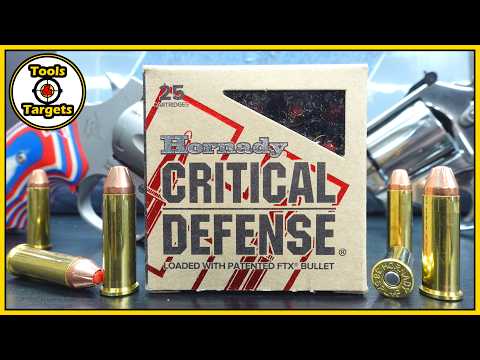
This review details a ballistic gel test of Hornady Critical Defense .38 Special +P 110 grain ammunition fired from 2-inch and 3-inch barrels. The testing instructor, demonstrating significant expertise, found the +P rounds produced mild recoil comparable to standard pressure .38 Special, with the primary difference being a louder report. Performance in gel showed good expansion and penetration within expected self-defense parameters.
This video compares the self-defense effectiveness of 5 rounds of .357 Magnum versus 6 rounds of .38 Special +P. While .357 Magnum offers higher energy potential with premium loads, the practical advantage often shifts to .38 Special +P when considering recoil management and the benefit of an extra round. Specialized .38 Special +P loads can even match or exceed standard .357 Magnum energy.
This video explores the evolving landscape of self-defense ammunition, moving beyond traditional hollow points. It details advancements like solid copper, fluted, and tumble-on-impact projectiles, highlighting their superior barrier penetration and terminal performance. The expert analysis covers bonded jacketed hollow points and ballistic tip designs, offering insights into why gun owners are adopting these newer technologies for improved reliability and effectiveness in various self-defense scenarios.
This expert-level guide, informed by a firearms instructor, details the shift away from traditional hollow points in 2025-2026 due to advancements in defensive ammunition. It covers Solid Copper Hollow Points, Fluted Solids, Tumble-on-Impact rounds, Bonded Jacketed Hollow Points, and Ballistic Tip ammunition, highlighting their performance characteristics, barrier penetration capabilities, and suitability for various firearm platforms and legal restrictions. The information emphasizes consistency, control, and versatility in critical situations.
This comprehensive ballistic gel test evaluates Hornady's Critical Defense (FTX) and Custom (XTP) .25 ACP ammunition. The host, demonstrating high expertise, uses a Beretta 21A Bobcat and a LabRadar to record velocities averaging over 900 fps. Results show neither round expanded through a heavy clothing barrier, with FTX penetrating 10.5 inches and XTP reaching 17.5 inches. The expert concludes .25 ACP is underpowered for self-defense, recommending hard-cast bullets over hollow points for this caliber.
This review compares .380 ACP hollow point ammunition against Full Metal Jacket (FMJ) rounds using ballistic gel tests. The Springfield Armory Hellcat .380 was used with Hornady Critical Defense and Federal HST hollow points, alongside CCI Blazer FMJ. Results showed FMJ over-penetrated, while hollow points expanded and stopped within the first gel block, demonstrating superior terminal performance for self-defense.
This video compares 9mm and .327 Magnum ammunition from Hornady Critical Defense through a ballistic gel test. The test involves a heavy clothing barrier and utilizes a Taurus 327 and a Canik Mete MC9. The description emphasizes responsible firearm practices and does not promote sales. The content is geared towards firearm enthusiasts interested in ammunition performance and self-defense capabilities.
This YouTube video provides a ballistic gel test of the Hornady Critical Defense .380 ACP ammunition. The test aims to determine if the most popular .380 Auto self-defense round lives up to its reputation for effectiveness. The video utilizes two popular firearms for the test: a Smith & Wesson Bodyguard 2.0 and an M&P Shield EZ, both chambered in .380 ACP. The testing is conducted under controlled conditions, including simulated heavy clothing penetration, to evaluate the ammunition's performance in a self-defense scenario. The creator emphasizes responsible firearm handling and clarifies that the video is for informational purposes only.
This video provides a practical guide to selecting and patterning buckshot for home defense shotguns, emphasizing the importance of testing ammunition in your specific firearm. Chris Baker from Lucky Gunner demonstrates how different buckshot loads, particularly 00 Buck, perform at common indoor distances, highlighting the impact of shell design and wads on pattern consistency. The expert assessment underscores the need for shooters to pattern their own chosen loads to ensure effective and safe performance.
This YouTube video provides a direct comparison between two popular 9mm ammunition types: Pilgrim Torch and Hornady Critical Defense. The analysis likely focuses on performance characteristics, such as expansion, penetration, and terminal ballistics, to help viewers understand the differences and make informed choices for self-defense or other applications. The video aims to offer practical insights for firearm owners interested in ammunition selection for their 9mm pistols.
Gun Laws by State
Read firearms regulations for all 50 states + D.C.
Find Gun Dealers
Search licensed FFL dealers near you.