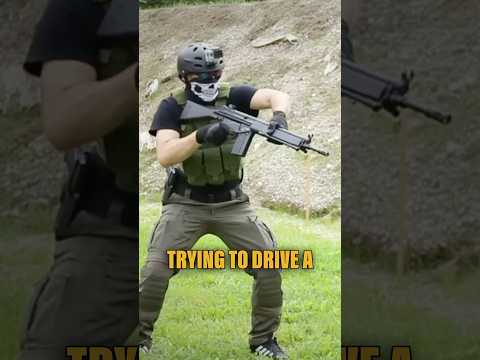
One-Handed Shooting: Why I Turn My Hand Inward

Published on October 9, 2019
Duration: 5:08

Instructor Mike explains the rationale behind turning the shooting hand inward at a 45-degree angle during one-handed shooting. This technique enhances muscular stability by engaging the pectoral muscles, which is crucial for managing recoil and maintaining control of the firearm, especially compared to fully extending the arm. A 90-degree turn is discussed as a specialized technique for close-quarters engagements.

Quick Summary

Instructor Mike explains that turning your shooting hand inward at a 45-degree angle during one-handed shooting enhances muscular stability by engaging pectoral muscles. This technique improves recoil management and weapons retention, offering greater control than fully extending the arm. A 90-degree turn is a specialized tactic for close-quarters engagements.

Chapters

  1. 00:00Introduction: Common Question
  2. 00:14Why Turn Hand Inward?
  3. 00:22Dexterity vs. Stability
  4. 00:33Managing Recoil
  5. 00:40The Science of Hand Rotation
  6. 01:01Power Punch Analogy
  7. 01:06Muscular Stability Gains
  8. 01:13Projecting Hand Outward
  9. 01:23Stability and Retention
  10. 02:02One-Handed Shooting Options
  11. 02:17The 45-Degree Angle
  12. 02:20Why Not 90 Degrees?
  13. 02:2490-Degree Turn: Close Quarters
  14. 02:51Slide Clearance for Ejection
  15. 03:10Close Quarters Engagement
  16. 03:26Tactical Flexibility
  17. 03:36Gun Fighting is a Fight
  18. 03:46Range vs. Real World
  19. 03:52Grabbing a Deadly Threat
  20. 04:01Conclusion and Safety
  21. 04:13Practice Safety Recommendations
  22. 04:26Basic Firearm Safety Rules
  23. 04:41Confirming Unloaded Firearm
  24. 04:58Final Safety Reminder

Frequently Asked Questions

Why should I turn my hand inward when shooting with one hand?

Turning your hand inward at approximately a 45-degree angle engages your pectoral muscles, significantly increasing muscular stability. This enhanced stability helps manage recoil more effectively and improves overall control of the firearm, which is crucial for accuracy and weapons retention.

What is the benefit of keeping the firearm closer to the body when shooting one-handed?

Keeping the firearm closer to your body enhances stability by leveraging your muscular and skeletal structure. When the firearm is projected fully outward, you rely more on the strength of your arms alone, making it easier for an adversary to move the weapon.

When is a 90-degree turn of the firearm recommended for one-handed shooting?

A 90-degree turn is typically reserved for close-quarters situations where you might need to deflect an upward attack or block an adversary. This angle also provides clearance for the firearm's slide to cycle, allowing for proper ejection of casings and chambering of new rounds.

How does hand rotation affect muscular stability in shooting?

Rotating your hand inward, similar to a power punch in boxing, tightens your pectoral muscles. This engagement provides a more stable platform for the firearm, allowing for better recoil absorption and control compared to a fully extended or neutral grip.

More Training & Techniques Videos You Might Like

More from Instructor Mike

View all →