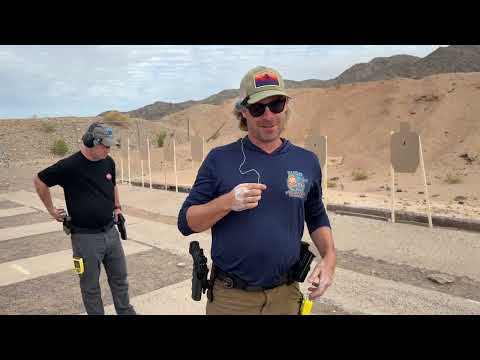
Practical Shooting After Dark EP 196

Published on July 14, 2022
Duration: 32:23

This episode of Practical Shooting After Dark focuses on identifying and correcting common vision and focus errors in shooting. Ben Stoeger and Joel discuss how to tell if a shooter is target-focused or sight-focused by observing posture, eye movement, and target transitions. They also cover how to recognize when shooters might revert to sight-focusing under pressure, such as during movement or when dealing with difficult shots, and how this impacts shot placement.

Quick Summary

To determine if you're sight-focused instead of target-focused, observe your posture and eye movement. A forward head tilt or 'turtling down' suggests sight focus. Your eye movements should smoothly track the sight if you're sight-focused, or hop between points if target-focused. An 'L-shaped' target transition also indicates sight focus, whereas ideal target transitions are direct lines.

Chapters

  1. 00:13Intro & Show Topics
  2. 01:32USPSA Organizational Issues
  3. 03:48Jake's Antagonistic Behavior
  4. 05:53USPSA Financial Background Checks
  5. 07:32Vision & Focus in Shooting
  6. 09:08Identifying Sight Focus Signs
  7. 11:02Eye Movement Analysis
  8. 12:10When Sight Focus Occurs
  9. 13:56Hits Trending with Movement
  10. 14:57Focal Depth Changes & Targets
  11. 17:37Correcting Vision Errors
  12. 19:31Honest Scoring in Competition
  13. 22:28Positive Contributions to Shooting Sports
  14. 26:09BRC Logic Pretzels & Organization Issues
  15. 30:33Magban Incident & Deflection
  16. 31:37Show Wrap-up

Frequently Asked Questions

How can I tell if I'm focusing on my sights instead of the target while shooting?

Look for a forward head tilt or 'turtling down' into the gun, especially during rapid fire. Also, observe your target transitions; an 'L-shaped' path suggests sight focus, whereas a direct line is ideal for target focus. Smooth eye movements tracking the sight indicate sight focus, while hopping movements suggest target focus.

What are common mistakes shooters make regarding focus during competition?

A common mistake is reverting to sight focus when shots are perceived as difficult, during movement, or when dealing with awkward positions. This can lead to hits trending in the direction of movement or scattered shots on close targets because the shooter is 'grabbing brown' instead of picking precise aiming points.

How does shooting on the move affect focus and shot placement?

When shooting on the move, it's easy to shift to sight focus, especially with dot sights that highlight perceived movement. This often results in hits trending in the direction of your movement because you're not effectively tracking the target. Practicing target tracking drills can help mitigate this.

What are signs that a shooter is not picking out small spots on targets?

Widely scattered hits on close targets, especially if shooting is precise at distance, indicate the shooter might be rushing and not aiming for specific spots. Similarly, many misses on steel targets suggest the shooter is looking at the general color of the steel rather than a defined aiming point.

More Training & Techniques Videos You Might Like

More from Ben Stoeger

View all →