Shooting Efficiency w. JJ Racaza

Published on November 3, 2016
Duration: 3:59

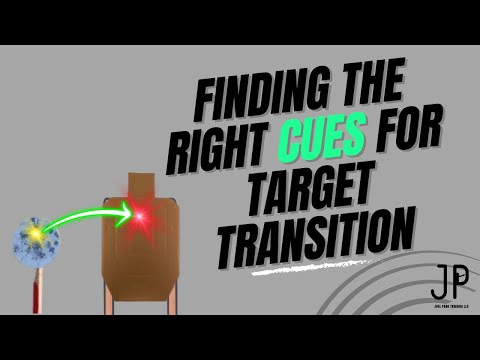
JJ Racaza explains high-speed marksmanship, focusing on efficient target transitions. He contrasts the inefficient 'flat line' method, which waits for recoil to settle, with the superior 'bump line' technique. The bump line uses recoil to drive movement to the next target, saving time and allowing for earlier trigger prep. Live demonstrations and slow-motion analysis highlight the biomechanics involved.

Quick Summary

JJ Racaza explains high-speed marksmanship, contrasting the inefficient 'flat line' target transition with the superior 'bump line' technique. The 'bump line' uses recoil to drive movement to the next target, saving time and enabling quicker follow-up shots.

Chapters

  1. 00:00Intro to High-Speed Marksmanship
  2. 00:44Defining Transition Techniques
  3. 01:14Inefficient Flat Line Transition Explained
  4. 01:56Efficient Bump Line Transition Explained
  5. 02:47Live Demo & Analysis
  6. 03:11Summary & Practice Tips

Frequently Asked Questions

What are the two main target transition techniques discussed by JJ Racaza?

JJ Racaza identifies two primary techniques: the 'flat line' transition, which is inefficient as it waits for recoil to settle, and the 'bump line' transition, which uses recoil to drive movement to the next target.

How does the 'bump line' transition technique improve shooting efficiency?

The 'bump line' technique utilizes the gun's natural recoil motion to initiate movement toward the next target. This proactive driving during recoil saves time, allowing for faster follow-up shots and overall improved transition speed.

What is the key principle behind 'stimulus response' in shooting?

'Stimulus response' means reacting to the shot itself as the stimulus to immediately begin moving towards the next target. It emphasizes continuous motion and minimizing pauses between shots for maximum efficiency.

Why is using a shot timer important for improving marksmanship?

A shot timer provides objective feedback on your performance, specifically measuring the time taken for target transitions and follow-up shots. This data ensures honest training and allows you to track measurable improvements.

More Training & Techniques Videos You Might Like

More from RECOILtv

View all →