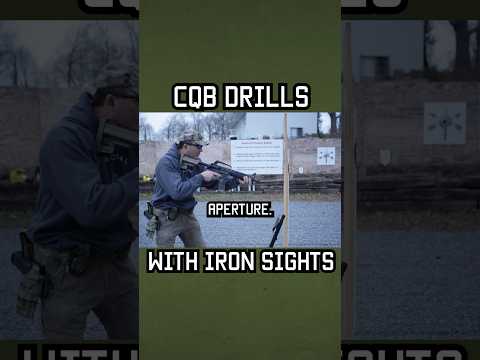
Try this next time you're at the range! CQB drills with iron sights #cqb #military #tips

Published on February 5, 2026
Duration: 1:03

This technique focuses on an alternative method for using iron sights, particularly beneficial for Close Quarters Battle (CQB) distances. By looking over the rear sight and focusing on the front sight post, shooters can improve situational awareness. While this method naturally aims higher due to the 'height over bore' offset common in firearms, it can be advantageous in CQB scenarios where targets are close and rapid acquisition is key.

Quick Summary

For CQB distances, a tactical iron sight technique involves looking over the rear sight and focusing on the front sight post. This method enhances situational awareness and can be faster than traditional sight alignment, partially mitigating the 'height over bore' offset common in firearms.

Chapters

  1. 00:00Introduction to Iron Sight Techniques
  2. 00:03Traditional Sight Picture vs. Faster Method
  3. 00:20Looking Over the Rear Sight Technique
  4. 00:36Height Over Bore Offset in CQB
  5. 00:51Practical Application of the Technique

Frequently Asked Questions

What is the advantage of looking over the rear sight when using iron sights for CQB?

Looking over the rear sight and focusing on the front sight post can significantly improve situational awareness in CQB. It allows the shooter to see more of their surroundings while still maintaining a usable aiming reference, which is crucial for rapid engagement at close distances.

How does the 'height over bore' offset affect aiming with iron sights in CQB?

The 'height over bore' offset means the firearm's bore is higher than the sight line. This requires aiming slightly higher than the target to compensate for bullet drop at range. In CQB, this offset is less pronounced, and some techniques, like looking over the rear sight, can mitigate the need for extreme compensation.

Is the technique of looking over the rear sight faster than traditional iron sight alignment?

For CQB distances, aiming over the rear sight can be faster because it bypasses the need for precise alignment through the rear aperture. The focus shifts to quickly placing the front sight on target, which is often sufficient for hits at very close ranges where precision is less critical than speed.

Related News

All News →

More Training & Techniques Videos You Might Like

More from Tactical Rifleman

View all →