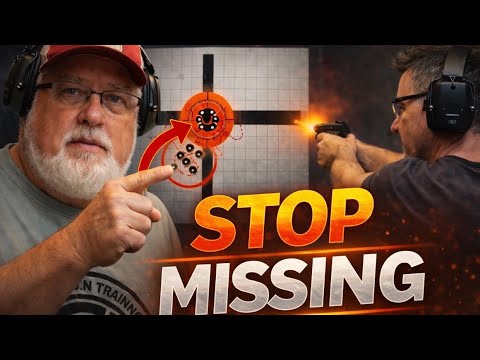
TUESDAY NIGHT AT THE RANGE LIVE PODCAST: EVERY SHOT TELLS A STORY

John G. Johnson, a firearms instructor with extensive experience, provides a comprehensive guide to improving pistol accuracy by identifying and correcting common shooting errors. He emphasizes understanding target analysis, mastering front sight focus, proper grip and trigger control, and developing consistent shooting habits. The instruction is geared towards helping both new and experienced shooters achieve greater proficiency and confidence.

Quick Summary

To improve pistol accuracy, focus on front sight focus, ensuring the front sight is the sharpest point. Practice a smooth trigger press using the tip of your finger, avoid pulling or slapping the trigger, and maintain a relaxed 60/40 grip with more pressure on the support hand. Analyzing target impact for common errors like low-left shots is crucial for correction.

Chapters

  1. 00:50Introduction & Instructor Bio
  2. 01:41Live Broadcast Platforms
  3. 02:03John G. Johnson's Firearms Training Facility
  4. 03:02Training Programs Offered
  5. 04:47Pistol Shooting Complexity
  6. 05:35Master Your Handgun Webinar
  7. 09:09Today's Topic: Accuracy & Storytelling
  8. 10:01Common Shooting 'Dragons'
  9. 11:24Analyzing Target Impact
  10. 12:26Example Target Analysis: Low Left
  11. 15:05Fixing Low Left: Weapon Over Eye
  12. 16:53Personal Accuracy Improvement
  13. 17:21Front Sight Focus Explained
  14. 18:19Target Analysis: Gun Not Level
  15. 19:07Solutions for Low Left Problems
  16. 20:04Front Sight Focus Demonstration
  17. 21:04Final Target Analysis & Fatigue
  18. 22:25Leaving the Range on a High Note
  19. 23:18The Paper Plate as a Defensive Target
  20. 24:39Target Panic Explained
  21. 26:50Discipline in Shooting
  22. 30:39Top 10 Range Problems & Fixes
  23. 30:55Problem 1: Low and Left Mystery
  24. 33:10Weapon Alignment Demonstration
  25. 35:12Fixes for Low and Left
  26. 36:29Problem 2: The Scatter Start
  27. 38:13Problem 3: Tight Groups, Wrong Place
  28. 39:33Sight Adjustment vs. Fundamentals
  29. 40:33Problem 4: High Right Impact
  30. 41:42Grip Fundamentals: Thumb Placement
  31. 42:13Problem 5: Lone Flyers
  32. 43:24Problem 6: Drifting to the Right (Fatigue)
  33. 44:47Regrouping Between Strings
  34. 46:07Stop Shooting if Inaccurate
  35. 46:49Consistent Accuracy is Key
  36. 48:54Problem 7: The Angry Trigger
  37. 50:00Trigger Cadence: Prep, Pause, Press
  38. 51:37Trigger Manipulation Causes Inaccuracy
  39. 52:15Problem 8: Lazy Reset
  40. 53:34Problem 9: The Tense Stance
  41. 54:15Recoil Management & Casing Ejection
  42. 56:42Problem 10: Rushing to Impress
  43. 57:07End Sessions with Perfect Shots
  44. 59:24System for Accuracy
  45. 60:06Master Class Reminder
  46. 61:15Closing Remarks & Safety
  47. 61:27Q&A Session
  48. 63:46Beretta PX4 Discussion
  49. 64:41Glock Model Discontinuation
  50. 66:35Favorite Range Drills
  51. 67:31Black Line Drill Explained
  52. 69:01Six O'Clock Hole Drill
  53. 69:48Single Shot Drill
  54. 71:22Glock Clones & Legal Issues
  55. 74:34YouTube Subscription Giveaway

Frequently Asked Questions

What are the most common reasons for shooting low and left with a pistol?

Shooting low and left is often caused by drifting your finger too far into the trigger guard, improper weapon alignment (not being over the dominant eye), or a jerky trigger press. Focusing on a smooth trigger engagement and ensuring the firearm is properly aligned with your dominant eye are key corrections.

How can I improve my pistol accuracy by focusing on the sights?

Implement 'front sight focus.' This means making your front sight the sharpest point of focus, ensuring it's clear and aligned. The target and rear sight will appear slightly blurred, which is normal and helps achieve greater accuracy.

What is the best grip technique for controlling recoil and improving accuracy?

A proper grip uses a 60/40 split, with more pressure from your support hand. Relax your firing hand slightly and let your support hand do the heavy lifting. Driving the weapon with your chest and back muscles also significantly aids recoil management.

What are some effective drills to practice at the range for accuracy?

Effective drills include the 'black line drill' (aiming at a horizontal line to check trigger control), the 'single shot drill' (focusing on one precise shot at a time), and the 'six o'clock hole drill.' These help identify and correct manipulation errors.

Why is it important to shoot in controlled strings of five rounds?

Shooting in controlled strings of five rounds helps combat fatigue, which is a major cause of accuracy degradation. It allows you to regroup, re-evaluate your grip and stance, and maintain consistency, ensuring your most accurate shots come first.

More Training & Techniques Videos You Might Like

More from Firearms Training By John G. Johnson

View all →