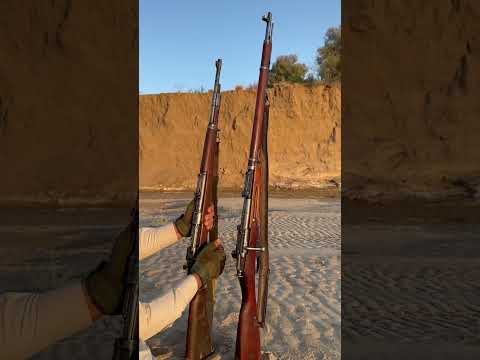
Walther KKW: Competition Shooting in Nazi Germany

Published on August 14, 2019
Duration: 14:27

This entry details the Walther KKW, a .22 LR bolt-action rifle developed in Nazi Germany as a standardized training tool for competitive shooting, mimicking the external profile of the Kar98k. It covers its historical context, technical specifications, production details, and post-war legacy, drawing on expert analysis from Ian McCollum.

Quick Summary

The Walther KKW (Klein Kaliber Wehrsportgewehr) was a .22 LR bolt-action rifle developed in Nazi Germany to serve as a standardized training tool. It was designed with an identical external profile to the Kar98k service rifle, facilitating realistic handling for military training and competitive shooting.

Chapters

  1. 00:00Introduction to the Walther KKW
  2. 00:30Nazi Influence on Shooting Sports
  3. 01:45Development and Manufacturer Challenges
  4. 03:46Standardization and Collaboration
  5. 05:58Markings and Mechanical Features
  6. 08:03Comparison with Kar98k
  7. 10:17Production History
  8. 11:42Post-War Legacy and US GI Souvenirs

Frequently Asked Questions

What was the primary purpose of the Walther KKW rifle?

The Walther KKW (Klein Kaliber Wehrsportgewehr) was designed as a standardized .22 caliber training rifle in Nazi Germany. Its main purpose was to mimic the handling and external profile of the standard-issue Kar98k service rifle, facilitating military training and competitive shooting.

How did the Walther KKW differ mechanically from the Kar98k?

While externally identical to the Kar98k for training realism, the Walther KKW featured a simpler single-shot bolt-action mechanism. A key difference was that the KKW's bolt handle served as the locking lug, whereas the Kar98k utilized front locking lugs.

Which manufacturers were involved in the production of the Walther KKW?

The development and production of the Walther KKW involved several German manufacturers, including BSW (Berlin-Suhler Waffen), Walther, and Mauser. BSW was a lead designer, and production was eventually unified across companies like Geco, Erma, and Anschütz.

What was the significance of the KKW's sights and external features?

The KKW's tangent rear sights were functionally similar to the Kar98k's but graduated to 200 meters, suitable for training. Its identical external profile, including stock dimensions and sling attachments, ensured realistic handling for soldiers training with the service rifle.

Related News

All News →

More Training & Techniques Videos You Might Like

More from Forgotten Weapons

View all →