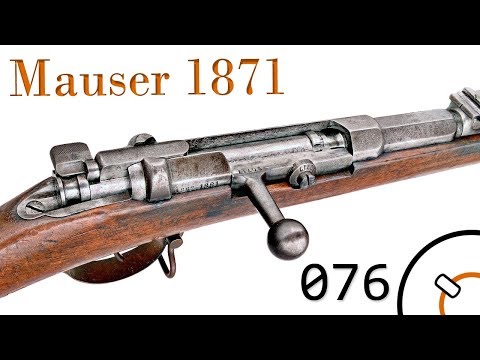
This video provides an in-depth look at the Mauser Model 1871, famously used in the Howth gun-running incident by the Irish Volunteers. Ian McCollum details the rifle's history, technical specifications, and its role in Irish history, including its use during the Easter Rising. The video also covers the logistical challenges and historical context of the event.
This guide details the shooting technique for the Mauser Gewehr 1871, a historical bolt-action rifle. It covers loading, firing, and the unique manual extraction process due to the lack of an ejector. The video highlights the rifle's smooth action and soft recoil from black powder cartridges, while also noting the potential for fouling. Expert instruction from Ian McCollum emphasizes safe handling and understanding the mechanical nuances of this classic firearm.
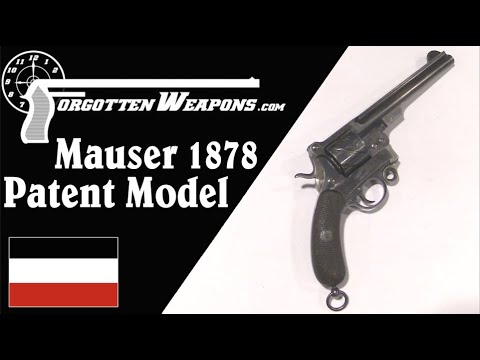
This guide details the Mauser 1878 'Zigzag' Revolver patent model, as presented by Ian McCollum of Forgotten Weapons. It covers historical context, unique features like its zigzag cylinder rotation and bottlenecked cartridge, differences between the patent and production models, and its performance in military trials. McCollum, a recognized expert in historical firearms, provides an in-depth look at this rare piece.
The Gewehr 71/84 is a bolt-action repeating rifle that served as Germany's transition from single-shot firearms. It features an 8-round tubular magazine and the 11mm Mauser caliber. Despite its historical significance, it was quickly superseded by newer designs.
This video provides an in-depth historical and technical examination of the German Mauser 1871 infantry rifle. It covers the development by the Mauser brothers, its technical specifications, design evolution, and service life, including its limited use in World War I. The content details the rifle's features, such as its single-shot, black-powder operation, 11mm caliber, and the early bolt-action mechanism, contrasting it with later designs and contemporary rifles.
This video offers a detailed book review of "The Modèle 1866 Chassepot" by Guy & Leonard A-R-West. The book comprehensively covers the development, mechanics, ammunition, production, markings, and historical impact of the Chassepot needle-fire rifle. It highlights the Chassepot's technological superiority over the Prussian Dreyse rifles during the Franco-Prussian War and mentions its later conversion to 11mm Mauser cartridges. The review notes the book's use of photographs and hand drawings for illustration, as well as firsthand soldier commentary, and provides purchasing information. The book is a 145-page softcover in color, published in the UK.
This review of the Mauser Model 71/84 11mm service rifle, presented by a speaker with high authority and deep technical knowledge, highlights its historical significance as an early repeater conversion. The video details its 8-round tubular magazine, 11mm Mauser caliber, and practical accuracy testing, concluding with an appreciation for its robust European craftsmanship.
You've reached the end! 7 videos loaded.
Gun Laws by State
Read firearms regulations for all 50 states + D.C.
Find Gun Dealers
Search licensed FFL dealers near you.