This guide details the operation of the LMG 08/15's unique 'Kurbel-Abgabach' or 'Sägehebel' pilot's charging mechanism. This complex linkage allowed pilots to manually cycle the entire action and feed system from the cockpit, crucial for clearing malfunctions. The video highlights its importance for aircraft reliability during WWI.
This video details the ZB53 machine gun, a Czechoslovakian design that was considered by Britain for tank and infantry use. It highlights the weapon's air-cooled design, its origins in Bruno, and its technical specifications, including its gas piston system and tilting breech block, which heavily influenced the British Bren gun. The presenter demonstrates a full disassembly and reassembly, explaining the function of key components like the accelerator and feed block.
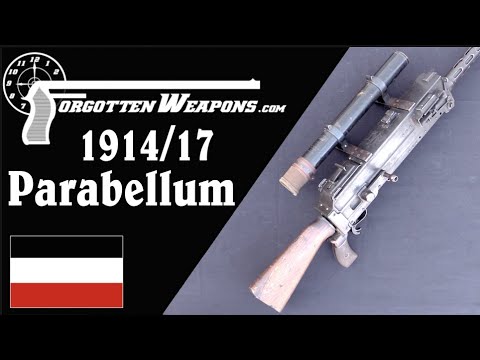
This guide details the disassembly of the rare Parabellum 1914/17 aircraft machine gun, based on expert instruction. It covers accessing the complex toggle lock bolt assembly via the unique sliding top cover and highlights key internal features like the mainspring and pistol grip safety. The process emphasizes the intricate mechanics designed for aerial use.
This guide details the operation and key features of the 11mm Vickers 'Balloon Buster' machine gun, a specialized WWI aircraft weapon. It covers its unique incendiary ammunition for balloon destruction, aircraft-specific modifications like air cooling and remote spring adjustment, and mechanical systems for synchronization and recoil management. The information is presented with high authority, drawing on detailed mechanical disassembly and historical context.
This entry details the Hiram Maxim Extra Light Maxim Gun, a rare air-cooled variant developed around 1895. It highlights its significantly reduced weight (27-28 lbs) compared to standard Maxims, intended for mobile cavalry use. Key features include its .303 British caliber, specific markings, and internal design changes like the relocated fusee spring. Despite its innovative design, it was a commercial failure with only 135 units produced.
This guide provides an overview of the Browning Model 1919 Tank Machine Gun, focusing on its key design features and historical context. It highlights the evolution from the water-cooled Model 1917, the air-cooling system, and specific components like the bolt stop lever and barrel shroud. The information is presented with the authority of a firearms expert, detailing the historical significance and technical aspects of this iconic weapon.
This guide details the disassembly and operational procedures for the M1919A4 Browning Machine Gun, presented by Paul Levy from Brownells. It covers loading methods, step-by-step disassembly, and headspace adjustment, emphasizing its recoil-operated, air-cooled design derived from the M1917. Levy, an expert with deep knowledge of firearm history and mechanics, demonstrates complex procedures with clarity.
This entry details the heavy machine guns of World War I, focusing on the German MG08, French Hotchkiss M1914, and British Vickers Gun. It highlights their design principles, operational mechanics, and the historical context of their adoption, drawing on expert analysis from Ian McCollum of Forgotten Weapons. The content emphasizes the technological advancements and strategic impact of these weapons on the Western Front.
This guide details the field stripping process for the Maxim lMG 08/15, as demonstrated by Mark and explained by Ian McCollum. It covers removing the buttstock, bolt carrier, fusee cover, barrel, and recoil spring assembly. The process highlights the robust and greasy nature of the components.
You've reached the end! 9 videos loaded.
Gun Laws by State
Read firearms regulations for all 50 states + D.C.
Find Gun Dealers
Search licensed FFL dealers near you.