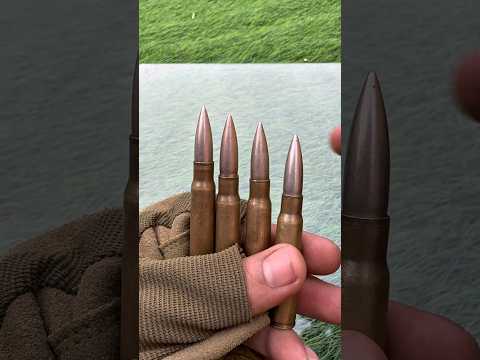
This video discusses the feasibility of reloading ammunition, particularly in a survival context. While reusing brass is presented as possible, the speaker strongly advises against attempting to manufacture primers or gunpowder due to extreme difficulty and impracticality. Reloading is acknowledged as potentially cheaper and beneficial for accuracy, but not recommended as a primary survival skill.
This video demonstrates the significant impact of primer choice on reloading results. By switching from Remington Gold primers to Federal 210 primers, the presenter observed a notable increase in average velocity and a decrease in standard deviation, even with identical other load components. The test highlights how primer selection can affect accuracy and point of impact.
This guide details the disassembly of a 12-gauge shotgun cartridge, as demonstrated by an experienced instructor from DROBASHEVICH. It covers the careful cutting of the crimped end, removal of internal components like the wadding and shot cup, and the extraction of the primer. This process is crucial for understanding ammunition construction and potentially for salvaging components for reloading or educational purposes.
This short video demonstrates the process of emptying cartridge casings to reveal gunpowder, pouring it into a dish, and igniting it. The content is primarily visual and lacks in-depth technical explanation or safety protocols beyond the implied handling of components.
This video features a content creator and reviewer discussing an upcoming review of a new powder funnel. The creator highlights their experience with reloading brands like RCBS and their preference for Hodgdon powders, indicating a knowledgeable background in ammunition reloading.
This video demonstrates a basic combustion test of cordite propellant, commonly found in older surplus ammunition like .303 British. The presenter, exhibiting enthusiast-level knowledge, safely extracts and ignites the stick powder, showcasing its rapid burn characteristics. The demonstration highlights safe handling of ammunition components and the visual properties of historical propellants.
This guide details the careful disassembly of a 70-year-old German 12-gauge shotgun shell, focusing on component identification and measurement. It highlights the use of tools like digital scales and calipers for analyzing buckshot size and powder weight. The process emphasizes safety when handling potentially unstable vintage explosives, as demonstrated by the high-authority speaker.
This guide details the experimental ignition of a .50 BMG tracer projectile, demonstrating how the pyrotechnic compound ignites when exposed to sufficient heat. The video, from Civilian Tactical, shows the process of applying a blowtorch to the tracer's base, resulting in a visible flare. It emphasizes understanding ammunition components and adhering to strict firearm safety protocols.
Instructor Mike explains the science behind recoil in firearms, focusing on how barrel length and ammunition components affect the shooting experience. He demonstrates that a larger firearm package, even with the same caliber, can result in less felt recoil due to how gases are managed during firing. This understanding is crucial for selecting a comfortable and usable firearm, especially for concealed carry.
This video provides a detailed ASMR-style disassembly of a vintage 32 gauge brass shotgun cartridge. The creator meticulously extracts and weighs the lead shot, measures individual pellets, and carefully removes the gunpowder. The process highlights the aesthetic and historical aspects of older ammunition components, demonstrating careful handling and measurement techniques.
This video discusses ongoing shortages of gunpowder and primers affecting major ammunition producers, particularly Federal. The issues stem from global supply chain disruptions, import taxes, and competition for raw materials with other industries. These component shortages can lead to changes in ammunition recipes, potentially affecting performance and ballistic coefficients, and are particularly impacting smaller dealers and reloaders.
This video provides a comprehensive overview of the ammunition reloading process, detailing the steps involved from brass collection to finished rounds. It critically analyzes the cost-effectiveness and time investment required for reloading compared to purchasing factory ammunition. The instructor emphasizes that while reloading can offer savings, the significant startup costs for equipment and the time commitment may not be worthwhile for all shooters, particularly those who prefer low-maintenance firearms.
Gun Laws by State
Read firearms regulations for all 50 states + D.C.
Find Gun Dealers
Search licensed FFL dealers near you.