This video from Kentucky Ballistics delves into the history and performance of Winchester's controversial Black Talon ammunition. Host Scott debunks myths about the ammunition being banned, explaining it was voluntarily withdrawn from the civilian market due to public pressure. Through extensive ballistic gel and body armor testing across various calibers, the video demonstrates the actual penetration and expansion capabilities of Black Talons, concluding they were not armor-piercing for handguns and were later rebranded as Ranger SXT.
This video provides an expert look at vintage Cubic Shot Shells, specifically the 'Brush Load' variant. The speaker, demonstrating deep knowledge of historical ammunition, highlights the unique cubic pellet shape and its intended use for hunting game like grouse and swamp rabbits in heavy cover. Crucially, he emphasizes critical safety warnings against using these loads in older Damascus or twist barrels, stressing their compatibility only with modern firearms.
This video explores 100-year-old ammunition, specifically 1917-dated Remington .45 ACP ball cartridges. Jerry Miculek highlights the use of cupro-nickel jackets and a case crimp designed to prevent bullet setback in early semi-automatic firearms. The content delves into the historical context and technical evolution of ammunition components.
This video explores vintage 12-gauge paper-hulled shotgun shells, testing their reliability in a GForce Arms Gatlander shotgun. Despite initial concerns about ignition and cycling, the paper shells proved reliable, cycling all six rounds without malfunction. The fired hulls showed charring but did not combust, and produced a distinct fireworks-like smell.
This YouTube video provides a brief historical overview of Pilgrim Ammunition. While the specific details of the history are not provided in the description, the title indicates a focus on the background and evolution of this ammunition brand. This content would be of interest to individuals interested in firearms, ammunition manufacturing history, and the evolution of shooting sports or defense technologies.
This video explores the historical evolution and advancements in firearm cartridges. It likely delves into the technological progress, design changes, and performance improvements of ammunition over time, offering insights into how cartridges have developed to meet various needs and applications. The content aims to educate viewers on the significant journey of cartridge technology.
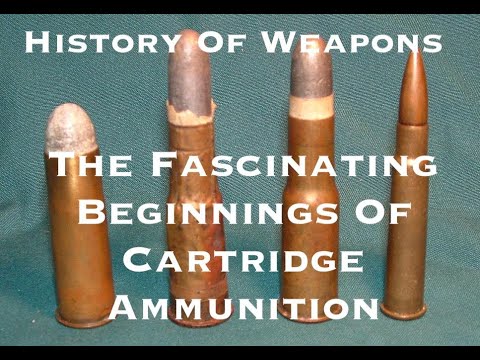
This YouTube video explores the historical development of cartridge ammunition, tracing its evolution to its modern form. It also includes promotional content for the creator's merchandise, Patreon, website, and social media channels, along with links to other related YouTube channels focusing on history of weapons and car classics.
This video explores Clement Pottet's pioneering work on the shotgun shell, detailing his 1829 and 1855 patents for metallic-based, paper-bodied cartridges. It showcases a rare Pottet shotgun featuring a unique rotating barrel action for cocking and extraction, highlighting its Damascus steel barrels and intricate internal mechanisms. The presentation emphasizes Pottet's foundational role in modern ammunition design, predating later refinements.
This YouTube video delves into the history of the .22 Long Rifle cartridge, highlighting its status as the most popular bullet of all time. The description encourages viewer support through Patreon and directs audiences to the creator's website for prayer requests and other YouTube channels. It also provides links to their Facebook page.
The 7.62x54R cartridge, developed in 1891, remains the world's longest-serving military round. Despite its rimmed design posing feeding challenges, its longevity is due to massive stockpiles and continued use in platforms like the PKM and SVD. The video covers its history, rifle variants from Mosin-Nagant to modern DMRs, ammunition types, and crucial maintenance regarding corrosive primers.
This video debunks the myth that the .270 Winchester was directly derived from the .30-03 cartridge. It explains that both the .270 Winchester and .30-06 Springfield share a common .473-inch head diameter, influenced by German Mauser designs like the 7x57mm. The .270's longer case length was a deliberate design choice to prevent accidental chambering in .30-06 rifles.
This video explores the Glock 20 pistol and delves into the history of the 10mm Auto cartridge. It provides links to purchase the Glock 20, an armorer's manual, and a LABRADAR chronograph, suggesting a focus on the practical aspects and technical data of the firearm and its caliber. The description also includes various affiliate links for recommended gear and a call to action for donations and Patreon support, indicating a channel dedicated to firearms content.
Gun Laws by State
Read firearms regulations for all 50 states + D.C.
Find Gun Dealers
Search licensed FFL dealers near you.