This YouTube video features shooting the Springfield Trapdoor Rifle at a range. The description highlights the USCCA YouTube Channel and promotes a special offer for new USCCA members, including free bonuses. It encourages viewers to watch the full video and provides a link for USCCA membership.
This video, "Enjoying Black Powder Episode 9: 1869 Swiss Vetterli," focuses on the historical Swiss Vetterli rifle. It highlights the firearm and offers a link to a full episode that includes a hand-loading instructional section. The content is presented by "Forgotten Weapons," suggesting an in-depth look at the rifle's historical context and potentially its operation and ammunition.
This guide details the loading and firing technique for the Mauser Model 71/84, as demonstrated by Ian McCollum. It covers loading the tubular magazine and the rapid cycling of the bolt. The video also touches upon historical military doctrine regarding ammunition conservation with early magazine-fed rifles. Instruction is provided with high authority and historical context.
This YouTube video, titled '1895 Steyr Single Shot: Part 1', focuses on the initial part of a presentation or review of the 1895 Steyr single-shot firearm. Without a transcript, the analysis is limited to the title, suggesting a deep dive into this specific firearm model, likely covering its features, history, or perhaps initial impressions and handling. It's the first installment, implying more content will follow.
The video highlights the Springfield 1873 Trapdoor rifle chambered in .45-70 Government as a favorite firearm. The presenter expresses a strong appreciation for its historical significance and the enjoyable shooting experience it provides, detailing the manual operation of the trapdoor action.
This "American Rifleman Television" segment delves into the unique Jacob double rifle, designed by John Jacob for the Scinda Irregular Horse. Though it never saw official military service, the rifle featured innovative design elements for its time, including a unique projectile with fins that threaded into the rifling, enhancing range and accuracy. The video discusses its development in contrast to the standard Pattern 1837 Brunswick rifle and its eventual sale as surplus after Jacob's death, leading to modifications for hunting purposes. The segment highlights the firearm's historical significance and the ingenuity behind its design.
This video showcases a sporterized Swedish m/1894 Carbine, manufactured in 1895 by Mauser Oberndorf A/N, Germany. The rifle is chambered in 6.5x55 SE. The title indicates a focus on a specific, modified historical firearm with details about its origin and caliber.
This video provides an in-depth look at the Model 1891 Argentine Mauser rifle, highlighting its historical significance as an early smokeless powder firearm closely based on the Belgian Model 1889. The presenter, Roy Hill from Brownells, details key features like its bolt action, detachable magazine, stripper clip capability, and the 7.65x53mm cartridge. He also discusses modifications made to the design after 1893, such as handguard length, magazine retaining screws, cleaning rod material, and rear sight types, suggesting his specific rifle was manufactured in 1896.
This guide details the loading, firing, and ejection technique for the Belgian Comblain Model 1882 rifle, as demonstrated by an expert firearm instructor. The video highlights the rifle's falling block action, its 11mm Comblain caliber, and specific handling requirements for reliable operation, particularly the inertia needed for casing ejection.
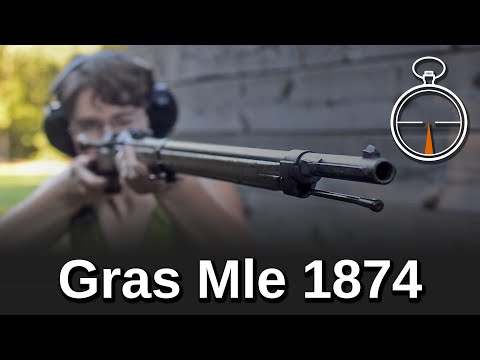
This review of the French Gras Mle 1874, presented with high authority by Mae from C&Rsenal, details its historical significance as a black powder rifle serving into the 1930s. The analysis covers its physical specifications, ergonomic challenges, single-shot bolt-action mechanism, sight system, and surprisingly pleasant trigger and recoil characteristics, concluding with an appreciation for its charming simplicity and performance.
This video details the unboxing of a crate of rifles imported from Ethiopia, primarily featuring Mannlicher M95 and Steyr Model 1878 Marine rifles. Expert Ian McCollum identifies specific markings and historical context for the Steyr, highlighting its use by the French Navy and subsequent Ethiopian markings. The diverse nature of Ethiopian arms caches is emphasized, with mentions of other European and American firearms also found in similar shipments.
This video features a review of the 1873 Trapdoor Springfield Carbine, a significant improvement over previous muzzle-loading military arms. The video highlights the rifle's historical importance and its belonging to a collector. It also includes links to the collector's channel for more information, the host's website, training resources, and various social media platforms. Sponsorships and calls to join firearm advocacy groups are also present.
Gun Laws by State
Read firearms regulations for all 50 states + D.C.
Find Gun Dealers
Search licensed FFL dealers near you.