This video from Forgotten Weapons, featuring Ian McCollum, explains why antitank rifles were not designed or used as sniper rifles. The core reason lies in the inherent differences in ammunition requirements and manufacturing complexities between the two weapon types. Sniping demands extreme precision, which is difficult to achieve with the specialized, multi-component armor-piercing ammunition typically used in antitank rifles.
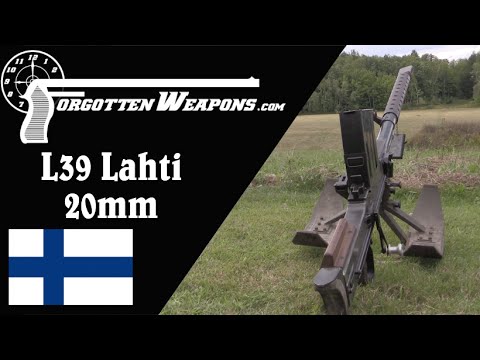
This guide details the operation of the Lahti L39 Antitank Rifle, as demonstrated by Ian McCollum of Forgotten Weapons. It covers manual bolt cycling using the integrated crank handle and magazine insertion. Crucially, it emphasizes a critical safety warning regarding hand placement near the action due to violent recoil and muzzle blast. The Lahti L39 is a semi-automatic rifle that locks open after each shot, requiring manual manipulation to chamber the next round.
This guide details the disassembly and loading procedure for the Polish wz.35 antitank rifle, as demonstrated by Ian McCollum. It covers bolt removal and magazine insertion, emphasizing safety protocols. The wz.35, a bolt-action rifle chambered in 7.92x107mm DS, was Poland's primary anti-armor weapon at the outset of World War II.
This video provides an in-depth expert review of the extremely rare Swiss Tankbuchse 41 (Tb 41) antitank rifle, presented by Ian McCollum of Forgotten Weapons. The analysis highlights its unique toggle-lock action developed by Adolf Furrer, its powerful 24x138mm caliber, and its historical deployment beyond tanks. The video emphasizes the weapon's rarity and its status as a registered NFA destructive device in the United States.
This video provides an expert-level look at a rare prototype Winchester Model 1918 .50 caliber antitank rifle, presented by Ian McCollum of Forgotten Weapons. The guide details the rifle's historical context, design by Winchester engineers Fred Humeston and Edwin Pugsley, and its unique bolt action utilizing a pistol grip handle. It also covers the field stripping process, highlighting the Mauser-style bolt and the catastrophic receiver failure experienced by the prototype.
This guide details the operational procedures for the Carl Gustav m/42 recoilless antitank rifle, focusing on loading and mechanical functions. It highlights the pivoting breech, extractor, trigger mechanism, and the wear characteristics of the breech block plate. Expert instruction from Ian McCollum emphasizes the unique design elements of this historical weapon.
This guide details the firing procedure for the Lahti L39 antitank rifle, as demonstrated by Ian McCollum. It covers essential steps from safety checks to cycling the action and firing. A critical safety warning regarding brass ejection is emphasized, highlighting the need for expert handling due to the weapon's historical design quirks.
You've reached the end! 7 videos loaded.
Gun Laws by State
Read firearms regulations for all 50 states + D.C.
Find Gun Dealers
Search licensed FFL dealers near you.