This expert-level explanation from Forgotten Weapons details the FARC-2 ratcheting anti-bounce buffer. The video breaks down its internal mechanism, highlighting the interaction between a ratcheting tooth and buffer body teeth, a locking pin, and an internal spring. It clarifies how the buffer functions to mitigate bolt bounce and absorb recoil energy at the end of its cycle, demonstrating its engineering for improved firearm performance.
The Geissele Super 42 buffer spring and buffer combo utilizes a unique three-strand braided wire design. This construction acts as a harmonic damper and energy absorber, with each strand flexing independently. This design aims to displace excess energy, reduce spring failure, enhance reliability, and minimize 'twang' while increasing return force by 15%. However, it is not recommended for 300 Blackout applications.
This video from AT3 Tactical discusses the rising cost of tungsten, a key material in AR-15 buffer systems (H1, H2, H3). The speaker notes the rattling sound in buffers is due to tungsten weights and advises viewers to consider purchasing buffers before prices increase further. The exact reasons for the tungsten price hike are unclear to the speaker, who seeks audience input.
This guide, drawing from the expertise of AT3 Tactical, explains why standard carbine buffers might be insufficient for optimal AR-15 performance. It recommends exploring heavier buffers (H1, H2, H3) and advanced systems like the Odin Works Adjustable Buffer and Armaspec Stealth Recoil System to fine-tune recoil impulse and enhance the shooting experience by slowing the BCG.
This video introduces the Armanov Counterweight Buffer for the AR-15 platform. The patented design features a moving weight that counteracts bolt carrier group reciprocation, aiming to reduce felt recoil. The demonstration highlights the internal mechanism and its potential benefits for AR-15 tuning and performance.
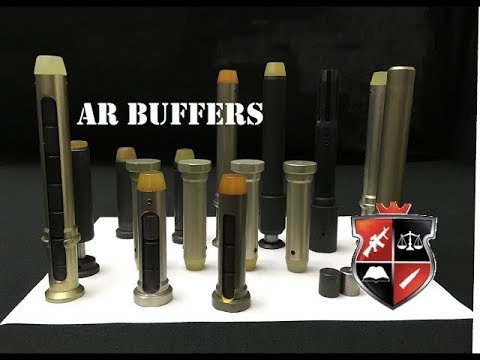
This video details AR-15 buffer assemblies, explaining the roles of buffer weights, springs, and buffer tubes in the firearm's cycling mechanics. It covers variations in buffer tube lengths and diameters (Rifle vs. Carbine, Mil-Spec vs. Commercial) and standard carbine buffer weights (3oz, H1, H2, H3). The content emphasizes matching buffer weight and spring to barrel length and gas system for optimal performance, recommending H2 as a versatile starting point for 5.56/.223 builds.
Choosing the right AR-15 buffer weight is crucial for optimal performance and reliability. Heavier buffers, like H2, H3, or H4, can help mitigate over-gassing, especially when suppressed or with shorter barrels. Monitoring ejection patterns is the most effective method for tuning buffer weight to your specific rifle configuration.
This video delves into the critical role of AR-15 buffers in rifle operation, explaining how buffer weight affects cycling and reliability. It details the principle of selecting the heaviest buffer that still allows bolt lock-back on an empty magazine. The content compares various buffer weights and discusses how heavier buffers can compensate for overgassing, preventing extraction issues like ripped casings or double feeds by slowing bolt carrier group velocity.
This video highlights the Crosshair Hydraulic Buffer. The description provides a direct link for ordering and obtaining more information. Based solely on the title and description, the content appears to be a product showcase for a firearm accessory.
You've reached the end! 9 videos loaded.
Gun Laws by State
Read firearms regulations for all 50 states + D.C.
Find Gun Dealers
Search licensed FFL dealers near you.