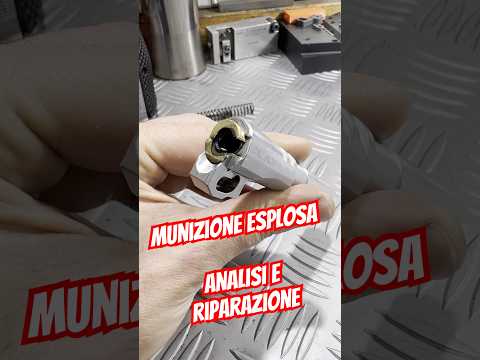
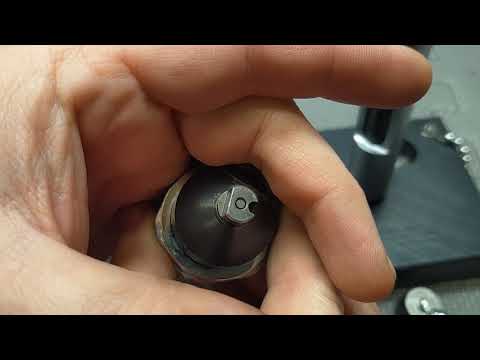
This video details the aftermath of an ammunition 'kaboom' event, focusing on the damage to a firearm's bolt face and ramp. It explains how overpressure or setback can cause the cartridge case to expand, copying the firearm's components. The instructor highlights the importance of the extractor channel's role in venting excess pressure and discusses the differences between a true kaboom and a setback event.
This video provides an abbreviated autopsy of a KAK Industries Milspec Bolt Carrier Group (BCG), focusing on a critical ejector issue. The instructor demonstrates how the ejector on the KAK BCG fails to collapse flush with the bolt face, indicating a manufacturing defect. A comparison with a BCM BCG highlights the expected functionality, where the ejector recesses below the bolt face.
This video features Brian Cook, inventor of the 6mm MAX cartridge, discussing its development, ballistics, and advantages over other AR-15 cartridges like the 6mm ARC and 6.5 Grendel. The discussion highlights the cartridge's design for small-frame platforms, its ability to maintain magazine capacity, and its performance in various shooting applications from DMR to hunting. The creators emphasize its reliability and efficiency, positioning it as a significant advancement in small-frame rifle cartridges.
This guide, based on expert instruction from Ian McCollum of Forgotten Weapons, details the critical concept of headspace in firearms. It explains what headspace is, why it's important for safe and reliable operation, and the risks associated with both insufficient and excess headspace. The guide also covers considerations for military surplus firearms and modern kit builds, emphasizing the shooter's responsibility for ensuring proper headspace.
This video focuses on crucial headspace elements within a firearm's frame, specifically highlighting the importance of the 'datum' and the 'abutment' where the bolt face makes contact. The creator emphasizes that these two areas are critical for proper function, while other parts, including the bolt face itself, have some allowable play due to factors like dirt and operational wear. The content suggests a technical discussion about firearm mechanics and tolerances.
This episode of The QA features Dave Tim from Guns and Tactics answering viewer questions on a variety of firearms-related topics. Key discussions include recommendations for dry-fire training systems, the effectiveness of short-barreled 5.56 rifles versus 300 Blackout, holster options for specific pistol models, red dot sight mounting techniques, and methods for teaching new shooting techniques. The video also covers optimal red dot brightness settings, trigger recommendations for duty use, the reliability of loaded chamber indicators, sight preferences for low-light conditions, firearm cleaning procedures for saltwater and debris, and comparisons between different .22LR rifle platforms.
This video provides a detailed inspection and partial disassembly of a Palmetto State Armory (PSA) chrome-lined, phosphate-coated M16-cut bolt carrier group (BCG). The instructor meticulously checks various components, including gas rings, ejector, extractor, firing pin, cam pin, bolt face, and gas key staking, using specialized gauges and tools. Key findings include a weak extractor spring, a non-beveled ejector edge, and a failure in the gas key staking during a reverse torque test, indicating potential issues with proper torque application and staking. The instructor plans to replace the gas key, screws, and springs to bring the BCG up to standard.
This video provides an expert review of the Ruger Mini Thirty, detailing its development from the Mini-14 platform to accommodate the 7.62x39mm cartridge. It covers historical context, technical differences from the Mini-14, evolution of bore diameter, and modern variations, offering insights valuable for collectors and hunters.
This video provides an in-depth inspection of a Forward Control Designs (FCD) Bolt Carrier Group (BCG) with an MP3 coating. The instructor highlights the smooth finish, robust staking, and specific component details like the extractor spring and firing pin protrusion. The review emphasizes the importance of proper lubrication and identifies minor operational wear as normal, not defects.
This video details the use of a rare 1973 U.S.G.I. firing pin protrusion gauge for the M16 rifle. It explains the gauge's components, calibration process using a dial indicator and set ring gauge, and its application on an M16 bolt carrier group. The presenter demonstrates how to check firing pin protrusion against specified tolerances, comparing it to other methods and highlighting its historical significance.
This guide details a comprehensive physical inspection and testing procedure for a Toolcraft Nickel Boron Bolt Carrier Group (BCG). It covers checking gas ring integrity, carrier bore measurements, gas key staking, borescope inspection of internal finishes, bolt component checks, firing pin protrusion, and headspace. The process highlights potential issues like excessive wear, uneven coating application, and critical dimensional tolerances that can affect firearm reliability.
This video provides a technical overview of AR-15 compatible straight-walled cartridges for deer hunting, specifically the 350 Legend and 450 Bushmaster. It details the necessary component changes for conversion, including bolt faces, barrels, muzzle devices, and magazines, highlighting the differences between the two calibers and their compatibility with the AR-15 platform. The instructor emphasizes that buffer changes are generally not required.
Gun Laws by State
Read firearms regulations for all 50 states + D.C.
Find Gun Dealers
Search licensed FFL dealers near you.