This expert guide details the operation of the Comblain Mousqueton 1871/83, a single-shot black powder carbine. It covers loading procedures, the importance of a firm action operation for reliable ejection, and insights into its historical military roles. The video emphasizes the unique characteristics of this historical firearm, including its trigger and sights.
This video delves into the historical evolution of the saber, a type of curved sword. While not a firearms video, it touches upon historical weaponry and military contexts. The channel's other content appears to be firearms-related, suggesting a broader focus on weaponry and defense.
This video provides an in-depth look at a Durs Egg breech-loading flintlock carbine, likely manufactured between the late 1780s and 1800. The presenter, Cory Wardrip, highlights its historical context as a cavalry weapon for the Light Dragoons and details its unique breech-loading mechanism, which utilizes a two-position lock. The video also touches upon its bayonet system and its similarity to the John Hall breech-loading rifle.
This video takes viewers behind the scenes of a spectacular horse show featuring the Winged Hussars, an elite 17th-century Polish cavalry unit. The show highlights their traditional uniforms and military skills, including mounted drill exercises with sabres, lances, and pistols. The description mentions the return of Jarek Struczyński, a past winner at the Royal Armouries Easter Tournament. The video showcases historical military cavalry demonstrations.
This video showcases a historical reenactment event featuring the Winged Hussars cavalry from Poland. The event, held at the Royal Armouries, highlights fast-riding, sharp-shooting, and sabre-wielding tactics. It's presented as a spectacular horse show with a focus on historical military cavalry prowess. The description also provides a link for ticket purchases and credits the European History Park Foundation for the video.
This video delves into the logistical challenges of ammunition resupply for 19th-century US cavalry, comparing the Colt Single Action Army (.45 Colt) with the Smith & Wesson Schofield Revolver (.45 Schofield). The Schofield's top-break design offered faster reloading, but cartridge incompatibility created significant field issues. The development of the 1877 Military Ball Cartridge, a compromise round, ultimately solved this logistical conflict.
This video, from the Royal Armouries series "Arms in Action," delves into the historical development of knights, castles, and siege warfare. It explores the romanticized versus the historical realities of knighthood, tracing its origins and evolution through European society. The description highlights the ingenuity of castle defenses throughout history, from ancient fortifications to those challenged by the age of gunpowder. The video emphasizes how ancient engineering solutions for defense remain remarkably effective even by modern standards.
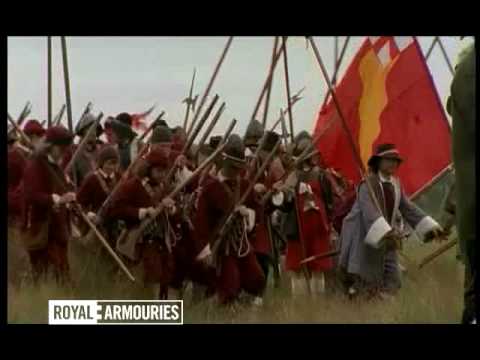
This YouTube video is a short film clip from the Royal Armouries museum in Leeds, focusing on firearms used during the English Civil War. It explores the weaponry of that historical period, providing a visual and historical overview of the firearms employed by those involved in the conflict. The content is derived from the 'War gallery' exhibition.
This video clip, sourced from the War gallery at the Royal Armouries museum in Leeds, provides a visual overview of the Battle of Marston Moor. It focuses on the historical context and likely armaments of the period, offering a glimpse into military engagements of the English Civil War era through museum exhibits.
You've reached the end! 9 videos loaded.
Gun Laws by State
Read firearms regulations for all 50 states + D.C.
Find Gun Dealers
Search licensed FFL dealers near you.