This video demonstrates a ballistic gel test comparing Full Metal Jacket (FMJ) and Soft Point (SP) ammunition against RMA Armament body armor. The test involves firing both ammunition types into ballistic gel placed behind the armor, with a water jug serving as a penetration indicator. The FMJ round impacted the ceramic plate, fragmenting, while the SP round's performance is observed for its potential to penetrate the armor and the water jug.
This video provides an in-depth review and ballistic test of the RMA Armament 1165MC Gen 2 NIJ Level IV body armor. The reviewer details the plate's specifications, including its thinness, high purity ceramic composition, multi-curve design, and lightweight construction. Multiple ballistic tests are conducted using various calibers (.30-06, 5.56x45mm, 9mm, .22LR) against a water jug target to assess penetration and backface deformation, demonstrating the armor's protective capabilities.
This video reviews the RMA Armor RF3 Level IV ballistic plates, highlighting their lightweight, thin profile, and advanced ceramic composition. The presenter conducts rigorous testing against military-grade ammunition including M855A1, M80A1, and the 6.8x51mm cartridge, demonstrating the plates' ability to stop threats with minimal backface deformation. The review also touches on edge protection capabilities and compares the RF3 to traditional SAPI plates.
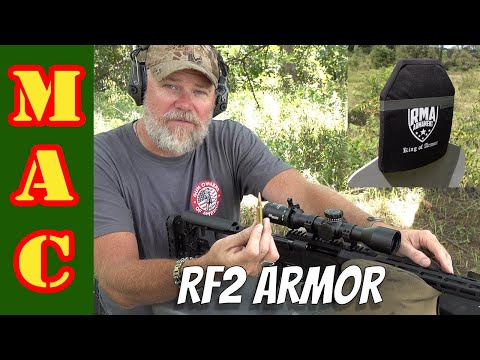
This video details the testing of the new RMA RF2 Plus armor plate, designed to bridge the gap between Level 3 and Level 4 protection. The presenter conducts rigorous ballistic tests using various rifle calibers, including M855, M855A1, .30-06 black tip AP, and the high-pressure 6.8x51mm cartridge. The armor demonstrates impressive performance, stopping all rated threats and even exceeding expectations on a fresh plate against the 6.8x51mm round, while highlighting the importance of backface deformation considerations.
This video features a comprehensive ballistic test of RTS Tactical Level IV ceramic body armor. The presenter, Mr. Madness, demonstrates the armor's performance against various calibers including 9mm, .44 Magnum, .30-06 Springfield, 5.56x45mm NATO (M855 green tip and XM193), and .460 S&W Magnum. The test setup includes a 5-gallon water jug behind the plate to simulate torso resistance. The presenter also discusses the RTS Tactical plate carrier, its features, and the use of Level III+ soft armor side plates.
This video from Predator Armor focuses on their Level IV body armor, highlighting its construction and manufacturing. It features a ceramic strike face and Kevlar backer, emphasizing its American-made quality and reliability. The description encourages viewers to visit their website for more information and exclusive content, and to subscribe for future updates on manufacturing and personal protective equipment.
This video from Predator Armor provides an in-depth look at their Level IV body armor. The description highlights that the armor features a ceramic strike face and a Kevlar pressed backer, emphasizing its manufacturing in the USA and its exceptional protection capabilities. The video aims to showcase the key features and the quality manufacturing processes behind this advanced personal protective equipment. Predator Armor encourages viewers to visit their website for more details and exclusive content. The video is tagged with relevant terms like Level IV Body Armor, Predator Armor, manufacturing, and level 4.
This video from Predator Armor provides an in-depth look at their Level IV body armor. It highlights the advanced construction, featuring a ceramic strike face and Kevlar pressed backer, manufactured in the USA. The content details the key features and manufacturing processes that ensure the quality and reliability of this protective gear, aimed at providing users with exceptional protection.
This comprehensive guide from Adam at Spiritus Systems breaks down the essentials of choosing and setting up body armor. It covers critical aspects like proper sizing for plates and carriers, understanding NIJ threat levels and special threat ratings, differentiating between SAPI and Shooters cuts, and the materials and costs involved. The video also details Adam's personal plate carrier configuration, offering practical insights for users.
This YouTube Shorts video from Predator Armor showcases their Level IV Body Armor, highlighting its U.S. manufacturing and advanced protection capabilities. The armor features a ceramic strike face with a kevlar backer, designed to stop armor-piercing rounds like the .30-06 AP round while limiting backface deformation. The description links to the product page for further details.
This video tests the penetration capabilities of M855A1 and M193 ammunition against AR500 steel armor using various AR-15 barrel lengths (14.7", 16", 18", and 20"). The results indicate that M855A1 can penetrate AR500 with a 20-inch barrel but is stopped by a 14.7-inch barrel. M193 penetrates AR500 with 18-inch and 20-inch barrels but is stopped by a 16-inch barrel. The presenter concludes that AR500 may not be reliable against standard ball ammunition from longer barrels, favoring ceramic armor.
This video compares steel and ceramic body armor, highlighting their respective strengths and weaknesses. Ceramic armor excels at stopping higher threats by shattering and breaking bullets, while steel armor is more durable against multiple hits and less susceptible to damage from drops. Both types are presented with comparable weight, but steel is noted as being thinner.
Gun Laws by State
Read firearms regulations for all 50 states + D.C.
Find Gun Dealers
Search licensed FFL dealers near you.