This video provides a detailed comparison of several 5.56x45mm NATO ammunition types used by the US Navy, focusing on their terminal ballistics and penetration capabilities. The Mark 255 Mod 1, featuring a compressed copper polymer core, is highlighted for its rapid fragmentation and potential for large wound channels, while the M855A1 is noted for its extreme penetration. The M855 Green Tip and Mark 262 Mod 1 are also tested for comparison.
This video explores the complexities of high-pressure and hybrid ammunition, featuring insights from ammunition designer Jesse (Boondock Battle Station). It debunks the notion of 'easy plug-and-play' performance gains, highlighting manufacturing challenges, potential weapon system degradation, and the need for redesigned components. The discussion emphasizes that current commercial high-pressure loads offer modest velocity increases, and the true potential lies in future weapon system development for smaller platforms.
This video provides an in-depth comparison of the M995 and M855A1 5.56mm rounds, showcasing their performance against various steel plates and concrete. The M995, featuring a tungsten carbide penetrator, demonstrates significantly superior penetration capabilities compared to the M855A1, especially against hardened steel targets. The host, from Banana Ballistics, highlights the M995's effectiveness and its high cost.
This video reviews the RMA Armor RF3 Level IV ballistic plates, highlighting their lightweight, thin profile, and advanced ceramic composition. The presenter conducts rigorous testing against military-grade ammunition including M855A1, M80A1, and the 6.8x51mm cartridge, demonstrating the plates' ability to stop threats with minimal backface deformation. The review also touches on edge protection capabilities and compares the RF3 to traditional SAPI plates.
This entry details the performance characteristics of the M855A1 5.56x45mm NATO round, as analyzed by Dirty Civilian. The analysis focuses on terminal ballistics in ballistic gel, highlighting expansion and fragmentation patterns. Key technical insights include its higher operating pressure (+10,000 PSI) and its design objective to achieve higher velocities from shorter barrels.
This video details a comprehensive ballistic testing of the Premier Body Armor Fortis Level III+ GT plate, a NIJ RF2 rated armor designed as a lightweight alternative to Level IV plates. The testing involves multiple rifle caliber threats at close range (25 feet) and extended distances (100 yards), evaluating penetration and back face deformation. The plate demonstrates impressive performance against common threats like 5.56x45mm and 7.62x39mm, while also showing its limitations against higher-level threats at longer ranges as expected.
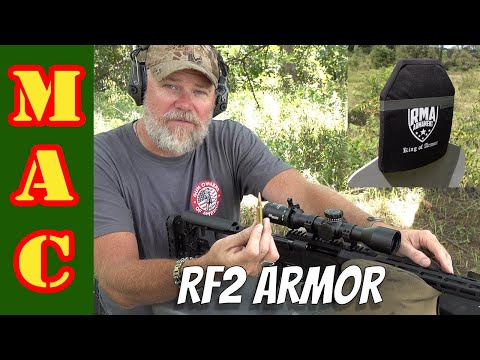
This video details the testing of the new RMA RF2 Plus armor plate, designed to bridge the gap between Level 3 and Level 4 protection. The presenter conducts rigorous ballistic tests using various rifle calibers, including M855, M855A1, .30-06 black tip AP, and the high-pressure 6.8x51mm cartridge. The armor demonstrates impressive performance, stopping all rated threats and even exceeding expectations on a fresh plate against the 6.8x51mm round, while highlighting the importance of backface deformation considerations.
This video, titled "The Ultimate Flex - M855A1 Burndown," focuses on a specific type of ammunition. While the exact content isn't detailed without a transcript, the title suggests a demonstration or test involving M855A1 rounds, likely in a firearms context. The description includes links to support the creator's channel through Patreon, Venmo, and Instagram, indicating a creator-driven content model. A disclaimer about the views not representing government agencies is also present. The video aims to showcase something related to firearms or ammunition performance.
This video provides an expert-level analysis of various 5.56x45mm ammunition types, comparing their terminal ballistics through extensive ballistic gel testing. The Dirty Civilian channel, known for its technical accuracy, demonstrates the performance differences between rounds like the M855, M855A1, M193, Sierra Matchking 77gr OTM, and a futuristic Black Arc Munitions 80.5gr OTM. The insights highlight how bullet construction, weight, and design significantly impact effectiveness in soft tissue, offering practical knowledge for firearms enthusiasts.
This video provides an in-depth review and ballistic testing of the Premier Body Armor Stratis Max body armor plates. The presenter, with apparent expertise in firearms and tactical gear, demonstrates the plates' performance against various rifle calibers, including 7.62x39mm steel core, M855 green tip, M855A1, and even a .50 caliber round. Key features highlighted include the RF3+ rating, multi-hit capability, ceramic construction, and edge-to-edge protection claims. The review emphasizes the importance of reliable body armor for personal defense and tactical operations.
This video provides an expert-level analysis of AR-15 magazines, differentiating between reliable and unreliable options based on extensive real-world testing. The speaker, drawing on experience as an Army drill sergeant, highlights the shortcomings of older PMAG generations and gray GI magazines, particularly with newer ammunition like M855A1. The recommended best-in-class magazines are tan GI magazines with blue followers, praised for their durability and compatibility with a wide range of ammunition.
This guide details a rigorous test protocol for evaluating the durability of TA Targets' AR550 steel C-zone target plates against various high-power rifle calibers, including military-grade armor-piercing rounds. The expert-led demonstration, conducted by TA Targets, showcases the target's resilience even under extreme conditions and a disadvantageous lean angle, reinforcing the company's lifetime warranty. The testing aims to validate that common hunting rounds like .300 Win Mag are unlikely to cause significant damage, while also demonstrating the target's ability to withstand more potent threats.
Gun Laws by State
Read firearms regulations for all 50 states + D.C.
Find Gun Dealers
Search licensed FFL dealers near you.