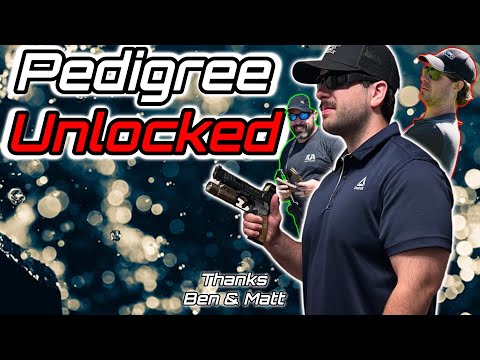
This video documents a USPSA competition day featuring the Atlas Artemis pistol. The shooter, Reno May, provides insights into his performance on various stages, including classifier stages shot from concealment. He discusses his accuracy, speed, and areas for improvement, highlighting the capabilities of the Atlas Artemis and offering advice on movement and visual patience during competition.
This guide, from an expert competitive shooter, details how to build speed in USPSA without sacrificing accuracy. It covers common time-wasting habits during draws, movement, and target transitions, emphasizing the importance of shooting while moving and off-balance. The strategy advocates for an integrated approach to dry fire and live fire training, focusing on efficient sight acquisition and trigger press to maximize speed while maintaining high accuracy.
This guide outlines the strategy for competing in a USPSA classifier match, focusing on achieving a Master class ranking. It emphasizes consistent stage execution, understanding hit factors, and leveraging performance data. The insights are derived from a Master-class shooter's experience, providing expert-level advice for competitive shooters aiming for higher classifications.
This video documents the speaker's second USPSA match, focusing on practical lessons learned. Key takeaways include the importance of walking stages to avoid forgetting targets, managing trigger freeze during rapid fire, and using competition as a training tool to improve speed for other disciplines like IDPA. The speaker also notes the efficiency of classifier stages in USPSA, allowing for a quick match completion.
This video details the journey to achieving Master class in USPSA Carry Optics, highlighting common mistakes and areas for improvement. The speaker, a Master class shooter, breaks down specific classifier stages, demonstrating how minor errors in fundamentals, target transitions, and stage memorization can significantly impact scores. It emphasizes the importance of consistent execution and practice to move towards Grandmaster.
Joel Park, a competitive shooter, discusses the common hurdles in USPSA classifications, particularly the progression from B to A and M to GM. He identifies two main camps of shooters stuck in B-class: those who are fast but inaccurate ('loose on points') and those who are slow but accurate ('over aimers'). The key to advancing, he explains, is addressing the specific weakness of each camp. For those stuck in B-class, the advice is to either become more disciplined with sight acquisition and trigger breaks or to simply 'send it' when the sights are sufficiently aligned, even if not perfectly still. Advancing to higher classes (A, M, GM) requires a consistent increase in both speed and accuracy, with M and GM classes demanding on-demand performance and consistency. Park also touches on the influence of classifier stage design and age on hit factors.
This video details a competitive shooter's performance in a USPSA match, highlighting both successful stages and areas for improvement. It covers challenges like adverse weather conditions, target visibility issues, and equipment malfunctions. The discussion also touches on new firearm optics, steel-framed pistols, and NFA item regulations, offering insights into competitive shooting strategy and firearm technology.
This video emphasizes the importance of varied and targeted practice for firearms proficiency. Instructor Joel Park advises against repetitive drills and encourages shooters to identify specific upcoming challenges, like matches or qualifications, to tailor their training. For general practice, he recommends rotating through different skills and target setups to develop a well-rounded shooting ability, rather than fixating on a single drill.
This episode of Practical Shooting After Dark features discussions on competition shooting techniques, stage design, and competitor experience. Mr. Kim shares insights on visualization and execution during target acquisition, emphasizing tracking the A-zone. The team reviews the Kansas Free State Match, praising its balanced stage design and the match director's responsiveness to competitor feedback. They also discuss hydration strategies with Squincher Squeeze popsicles and delve into the controversial 'Virginia Count' rule in competitive shooting, explaining its impact on strategy and scoring.
This episode of Practical Shooting After Dark features Ben Stoeger, Matt Hopkins, and Joel Park discussing recent USPSA rule changes, particularly regarding weight limits in Production and Carry Optics divisions, and the declining relevance of Production. They also debate the merits of major vs. minor power factors, the number of divisions, and the effectiveness of range officers. The conversation touches on the importance of stage design and the future of competitive shooting divisions.
This episode of the Practical Pistol Show features Ben Stoeger, Tim Herron, and Kim discussing competitive shooting strategies. Key topics include balancing speed and accuracy, understanding hit factors, and managing mental pressure during classifier stages. They also touch on the role of physical training and dry fire in improving performance.
This video provides a breakdown and analysis of a USPSA match from the perspective of a competitor. The speaker, an experienced shooter, discusses their performance on various stages, highlighting areas for improvement in accuracy, reload speed, and target engagement. Key takeaways include the importance of accurate shooting on steel targets, efficient reloading techniques, and meticulous preparation of ammunition before a match.
Gun Laws by State
Read firearms regulations for all 50 states + D.C.
Find Gun Dealers
Search licensed FFL dealers near you.