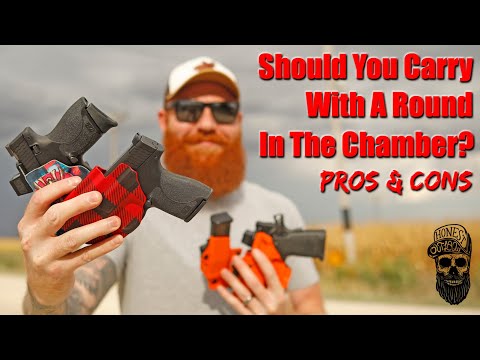
This guide, informed by an experienced firearms reviewer, details the considerations for carrying a firearm with a round in the chamber. It covers the 'Condition 3' method, proper slide racking techniques, challenges posed by optics, and the critical role of a quality holster. The speaker emphasizes that modern firearms are drop-safe, making round-in-chamber carry safe with proper equipment and training, recommending it for maximum readiness.
This guide details the Israeli approach to firearm carrying, contrasting Condition 3 (empty chamber) for safety with the need for Condition 1 (chambered round) in high-threat situations. It emphasizes practical one-handed racking drills taught for civilian counter-terror training, reflecting a unique cultural and tactical perspective on firearm readiness. Instruction is provided from an expert with deep knowledge of Israeli defense practices.
Colion Noir, a renowned firearms advocate, explains five critical reasons to carry a handgun with a round in the chamber (Condition 1). He emphasizes increased speed in deployment, reduced risk of malfunctions under stress, the necessity of one-handed operation, the 'plus one' capacity benefit, and overcoming cognitive load. Noir also addresses safety concerns, advocating for high-quality trigger guard-covering holsters to virtually eliminate accidental discharge risks.
This guide details the unique Spetsnaz Push-Through Holster technique for the Makarov PM pistol, as demonstrated by Tim from Military Arms Channel. It focuses on the 'Condition 3' carry and the automated slide racking, hammer cocking, and safety disengagement achieved by pushing the pistol down through the holster for an immediate ready-to-fire draw. This method is presented as a highly efficient tactical draw.
This guide, informed by John Correia of Active Self Protection, emphasizes the critical importance of carrying a firearm with a chambered round (Condition 1) for effective self-defense. It highlights the fatal delays associated with empty chamber carry (Condition 3) during reactive encounters and stresses the need for constant situational awareness and a prepared mindset. The analysis underscores that tactical mistakes and equipment readiness are paramount in surviving a gunfight.
This video from Active Self Protection analyzes a home invasion defense scenario in Harare, Zimbabwe. Host John Correia, a recognized expert in defensive shooting, breaks down the incident, emphasizing the importance of early warning systems, home security measures, and tactical considerations during a gunfight. Key takeaways include the critical nature of ammunition capacity, the challenges of drawing from the drop, and the tactical implications of carrying with an empty chamber.
This entry details a high-intensity traffic stop where an officer was shot and returned fire. It covers the critical moments of the incident, including the officer's immediate actions, pursuit initiation, and attempts to deploy her patrol rifle under extreme stress. The analysis highlights tactical considerations for approaching vehicles and the importance of equipment reliability in high-stress scenarios.
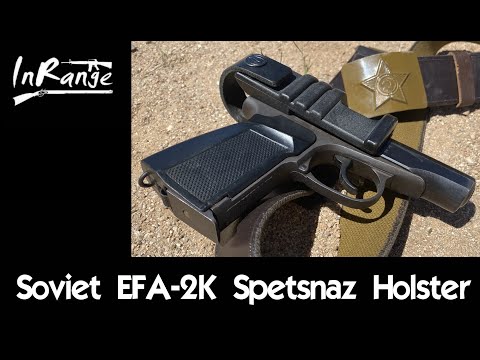
This guide details the draw technique for the Soviet EFA-2k Spetsnaz holster, designed for Condition 3 carry. The holster's unique mechanism racks the slide and cocks the hammer during the draw. While tested on a Makarov PM, the instructor, Karl Kasarda, found no significant speed advantage over traditional methods and raised serious safety concerns regarding its push-through design, comparing it to criticisms of the Serpa holster.
Lenny Magill discusses various 'Conditions of Readiness' for concealed carry, from the safest Condition 4 (unloaded) to the immediately ready Condition 0. He explains their historical context with the 1911 and their application to modern firearms like Glocks, emphasizing personal choice based on situational awareness and comfort. Magill personally prefers Condition 3 (chamber empty) for safety, even with Glocks, and details safe handling, holstering, and draw techniques.
This stage from Finnish Brutality 2019, 'BMP Escape', is a demanding tactical shooting drill. Competitors start inside a BMP, engage pistol targets, then transition to a rifle to neutralize multiple steel targets and move equipment (dummy and ammo cans) under adverse conditions, including rain. The stage emphasizes speed, accuracy, and physical exertion, requiring shooters to manage equipment and maintain focus in a challenging environment.
This video from Polenar Tactical offers a satirical look at modern tactical shooting trends, mocking impractical techniques and social media-driven "tactical" culture. The instructors, identified as experts with high authority, demonstrate fluid weapon manipulation and proper gear use through humorous, exaggerated drills. It critiques the disconnect between online "tactical" personas and effective, practical firearm handling.
This video details the 'Hard as Hell 2 Gun' team relay race, a competition focused on camaraderie and fun. Competitors run through rifle stages, engaging multiple targets, before transitioning to a pistol phase with various steel and paper targets. The event emphasizes a positive, supportive atmosphere over hyper-competitiveness, with a unique 'lame' penalty system and a focus on building team spirit.
Gun Laws by State
Read firearms regulations for all 50 states + D.C.
Find Gun Dealers
Search licensed FFL dealers near you.