This video provides an expert-level deep dive into the .303 British B-IV Mark 4 incendiary bullet, a rare WWII munition. The host, demonstrating high authority and expertise, details its complex centrifugal air-induction ignition system, the purpose of its external rib for balloon penetration, and its dramatic effects on various targets including ballistic gel and simulated fuel tanks. The video also touches upon the corrosive nature of older primers and proper cleaning techniques.
This video from Brownells, featuring Steve and Caleb, addresses the common concern about whether steel-cased ammunition can damage firearms. They explain that modern steel-cased ammo is generally safe for most platforms, including modern AR-15s and AK-47s, debunking myths about polymer coatings and corrosive primers. While steel cases can cause increased extractor wear and carbon blowback due to less efficient chamber sealing compared to brass, the cost savings on ammunition typically outweigh the minor maintenance costs of occasional extractor replacement. The video highlights that historical issues were often due to corrosive primers, not the steel cases themselves.
The 7.62x54R cartridge, developed in 1891, remains the world's longest-serving military round. Despite its rimmed design posing feeding challenges, its longevity is due to massive stockpiles and continued use in platforms like the PKM and SVD. The video covers its history, rifle variants from Mosin-Nagant to modern DMRs, ammunition types, and crucial maintenance regarding corrosive primers.
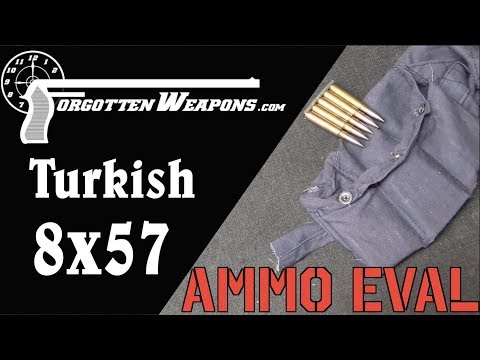
This video provides an expert evaluation of 1941 Turkish 8mm Mauser ammunition by Ian McCollum of Forgotten Weapons. The analysis highlights the ammunition's high velocity, corrosive Berdan primers, and flake powder, noting significant overpressure issues evidenced by primer cratering and damage to a Kar98k rifle stock. McCollum strongly advises against using this ammunition in semi-automatic or fully automatic firearms due to the risk of catastrophic failure and injury.
This video provides an expert evaluation of Ethiopian 7.92x57mm Mauser surplus ammunition, presented by Ian McCollum of Forgotten Weapons. The analysis covers historical context, component breakdown, and performance testing, highlighting its corrosive nature and variable reliability compared to modern ammunition. McCollum's deep expertise in historical firearms and ammunition is evident throughout the detailed examination.
This review focuses on Ballistic Advantage's 5.45x39mm barrels for the AR-15 platform. The video explains the 5.45x39mm cartridge as the Russian equivalent of 5.56x45mm, originating from the AK-74. While historically cost-effective, ATF import restrictions have impacted surplus ammunition pricing. The review highlights the need for a specific 5.45x39mm bolt and dedicated magazines due to dimensional differences and potential corrosive primers in surplus ammo. Ballistic Advantage barrels are constructed from durable 4150 chromoly steel with M4 feed ramps featuring Fail Zero nickel boron coating for corrosion resistance. Available lengths include 10.5 and 16 inches.
This guide emphasizes the critical importance of understanding and respecting firearm pressures and headspace during handloading. It warns against dangerous practices like pushing loads to the point of blown primers or difficult bolt lifts, highlighting the potential for firearm damage. The instructor stresses adhering to published load data, starting with reduced charges, and using incremental testing for safe load development. Proper headspace management and the avoidance of corrosive ammunition are also detailed as crucial safety measures for preventing catastrophic failures and preserving firearm integrity.
You've reached the end! 7 videos loaded.
Gun Laws by State
Read firearms regulations for all 50 states + D.C.
Find Gun Dealers
Search licensed FFL dealers near you.