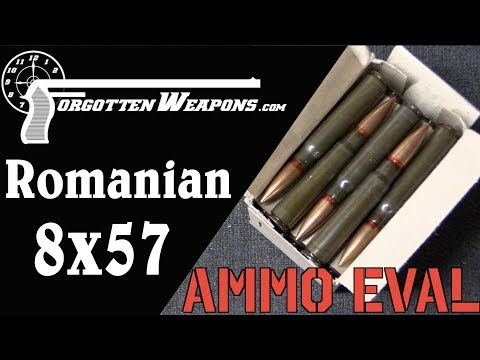
Ammunition Evaluation: 1941 Turkish 8mm Mauser

Published on January 22, 2019
Duration: 14:33

This video provides an expert evaluation of 1941 Turkish 8mm Mauser ammunition by Ian McCollum of Forgotten Weapons. The analysis highlights the ammunition's high velocity, corrosive Berdan primers, and flake powder, noting significant overpressure issues evidenced by primer cratering and damage to a Kar98k rifle stock. McCollum strongly advises against using this ammunition in semi-automatic or fully automatic firearms due to the risk of catastrophic failure and injury.

Quick Summary

Ian McCollum of Forgotten Weapons warns against using 1941 Turkish 8mm Mauser ammunition due to high velocities (avg. 2948 fps with 154.3gr bullet), corrosive Berdan primers, and significant overpressure signs like primer cratering and stock damage. He strongly advises against its use in semi-automatic or fully automatic firearms.

Chapters

  1. 00:08Ammo Evaluation: 1941 Turkish 7.92x57mm Mauser
  2. 01:39Range Testing with Kar98k
  3. 04:19Historical Context & Design
  4. 06:10Packaging and Markings
  5. 07:37Technical Analysis: Powder & Primers
  6. 08:54Evidence of Overpressure: Cratering
  7. 10:57Rifle Damage from High Pressure
  8. 11:48Final Assessment & Warning

Frequently Asked Questions

What are the main dangers of using 1941 Turkish 8mm Mauser ammunition?

The primary dangers include excessive pressure, which can cause primer cratering, damage firearm stocks, and potentially lead to catastrophic firearm failure. It is strongly advised against using this ammo in semi-automatic or fully automatic firearms due to volatility.

What are the key technical specifications of the 1941 Turkish 8mm Mauser ammunition?

This ammunition features a 154.3-grain bullet traveling at an average velocity of 2948 fps. It utilizes flake powder and corrosive Berdan primers, and is a copy of the German 'S' cartridge design.

Why is 1941 Turkish 8mm Mauser ammunition considered potentially dangerous?

Decades of storage may have increased pressure beyond original design. The high velocity combined with potential pressure spikes, indicated by primer cratering and stock damage, makes it risky, especially for modern semi-auto firearms.

What cleaning is required after firing corrosive ammunition like the 1941 Turkish 8mm Mauser rounds?

After firing corrosive ammunition, immediate and thorough cleaning is essential. This typically involves using a water-based solvent or a mixture of water and Windex to neutralize corrosive salts, followed by proper lubrication and oiling of the firearm.

Related News

All News →

More Reviews Videos You Might Like

More from Forgotten Weapons

View all →