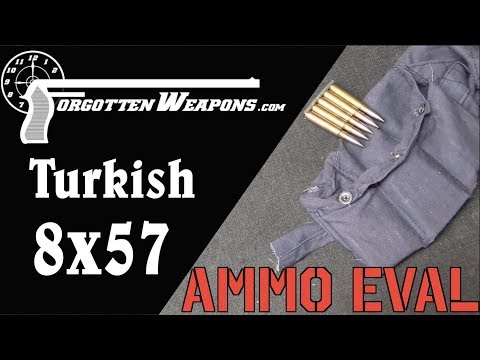
Ammo Evaluation: Romanian 8mm Mauser

Published on January 8, 2019
Duration: 15:58

This evaluation of Romanian 8mm Mauser ammunition from the 1970s reveals a consistent, though not precision-oriented, load. The MD 71 cartridges feature lacquered steel cases, steel-core bullets, and Berdan primers, noting a unique 56mm case length. While reliable for general use and machine guns, the ammunition is corrosive and requires thorough cleaning.

Quick Summary

Romanian 8mm Mauser MD 71 ammunition from the 1970s features lacquered steel cases, Berdan primers, and a steel-core bullet. It is highly corrosive and requires immediate cleaning with water-based solvents to prevent rust. Average velocity is 2674 fps with a 107 fps spread.

Chapters

  1. 00:00Introduction to Romanian 8mm Mauser
  2. 02:04Range Testing and Chronograph
  3. 04:40Packaging and Markings
  4. 09:21Cartridge Technical Specifications
  5. 11:11Velocity and Performance Analysis
  6. 12:05Headstamps and Corrosivity
  7. 13:14The 56mm Case Length Mystery

Frequently Asked Questions

What are the key characteristics of Romanian 8mm Mauser MD 71 ammunition?

This 1970s Romanian 8mm Mauser MD 71 ammo features lacquered steel cases, Berdan primers, and a steel-core bullet. It's known for its corrosive nature and a slightly shorter 56mm case length compared to the standard 57mm.

Is Romanian 8mm Mauser MD 71 ammunition corrosive?

Yes, the Romanian 8mm Mauser MD 71 ammunition is highly corrosive. It is crucial to clean firearms thoroughly with water-based solvents immediately after use to prevent severe barrel rusting.

What is the typical velocity and consistency of Romanian 8mm Mauser MD 71 ammo?

The average velocity for this ammunition is around 2674 fps. While consistent in bullet weight (154.2 grains), the velocity spread is about 107 fps, making it less ideal for precision but good for general use.

Where was Romanian 8mm Mauser MD 71 ammunition produced?

This ammunition was produced at the UM Sadu plant in Bombesti-Jiu, Romania, identified by factory code '22'. It was likely manufactured for export during the 1970s.

More Reviews Videos You Might Like

More from Forgotten Weapons

View all →