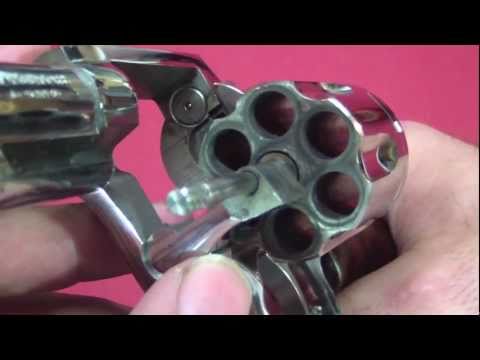
This video discusses firearm cleaning techniques, with the speaker primarily using CLP but also Hoppe's solvent. He notes that by avoiding lead ammunition and exclusively shooting full metal jacket or solid copper rounds, he minimizes lead buildup. The focus of his cleaning is often on removing 'burn rings' from cylinder ends, especially when shooting .38s and .357s, to ensure smooth chambering of rounds.
This guide details a thorough method for cleaning and lubricating revolvers, emphasizing the importance of removing all fouling and excess oil to prevent corrosion. The process involves detailed cleaning of the barrel, cylinders, and internal components, followed by a light application of oil and thorough drying with an air compressor. Proper lubrication and cleaning techniques are crucial for maintaining firearm longevity and reliability.
This guide details the basic field stripping and cleaning process for revolvers, demonstrated on a Smith & Wesson K-frame. It covers removing grips, disassembling the cylinder, cleaning the barrel and chambers using solvents and brushes, and reassembly. The instructor emphasizes preventing solvent ingress under grips and proper oiling techniques to avoid attracting debris. The process is presented as achievable in about 15 minutes for a quick turnaround after a range trip.
This guide provides a methodical approach to cleaning Ruger Single-Action Revolvers, emphasizing safety and thoroughness. It details the process from initial unloading and chamber checks to cylinder, barrel, and frame cleaning, followed by proper lubrication and reassembly. The instruction comes from an official Ruger technician, ensuring high authority and expertise.
This video provides guidance on preventing bullet casings from sticking in revolver cylinders. The primary advice is to avoid oiling the cylinders, as this can act as an adhesive. Instead, cylinders should be kept clean and dry. The speaker also notes that aluminum-cased or weaker reloaded ammunition, or residue left from firing .38 Special rounds before .357 Magnum, can cause casings to stick. Proper cleaning after firing .38 Special is recommended to prevent future issues with .357 Magnum rounds.
This video addresses frequently asked questions about using paper cartridges with cap and ball revolvers. It confirms that round balls can be used instead of conical bullets and that no hole needs to be poked in the cartridge for ignition. The presenter clarifies that combustible cartridges are loaded as-is, and while paper residue may remain, it generally doesn't hinder subsequent shots. Best practices for storage, preventing hang fires and chain fires, and using black powder substitutes are also discussed.
This video provides a comprehensive guide on how to properly clean a revolver, presented by George P, a product specialist at OpticsPlanet.com and an experienced handgun shooter. The tutorial breaks down the cleaning process into five key parts: preparation and safety, cleaning the bore and muzzle, cleaning the cylinder and extractor, finishing touches, and oiling the revolver. It offers valuable insights into choosing cleaning supplies, effective techniques, and crucial safety measures for revolver maintenance. The video also directs viewers to OpticsPlanet.com for gun cleaning equipment and more instructional content.
This guide details the proper cleaning procedure for a single-action revolver, following disassembly. It covers cleaning the bore, cylinder chambers, frame, and ejector housing using specific tools and solvents. The video emphasizes securing the firearm in a padded vise and protecting the frame during cleaning. It also recommends specialized tools like the Brownells Lewis Lead Remover for stubborn fouling.
This guide details how to remove stubborn burn rings from the cylinder face of a revolver, a common issue for .357 Magnum revolvers like the Colt Magnum Carry. The video demonstrates two methods: using a Lead Away cloth (with a caution for blued finishes) and a more cost-effective approach using a green Scotch-Brite pad and Hoppe's No. 9 solvent on stainless steel. The instructor, an experienced firearm enthusiast, emphasizes light pressure on stainless steel to avoid removing metal, showing the effective results of the Scotch-Brite method.
You've reached the end! 9 videos loaded.
Gun Laws by State
Read firearms regulations for all 50 states + D.C.
Find Gun Dealers
Search licensed FFL dealers near you.