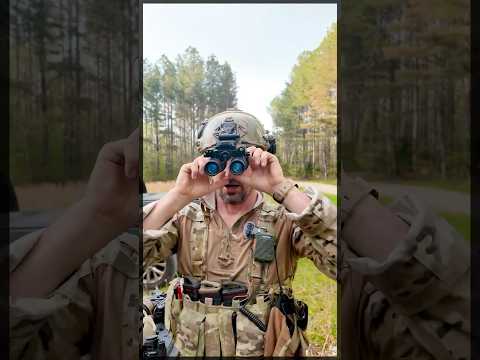
This entry provides an expert overview of the RIX RNV-31 dual-tube night vision goggles, highlighting its value proposition as an affordable entry into binocular NVG technology. It details the Gen 2+ white phosphor tubes, housing features, battery life, and compares its performance against higher-end Gen 3 systems. The review also touches upon the tested firearm, an Extar EP9, and an IR laser unit, the SMS Laser Trinity.
The InfiRay Jerry-31 offers an affordable entry into dual-tube white phosphor night vision, priced around $4,000. While it compromises on lens quality and features like auto-shutoff reliability compared to high-end US-made units, its dual tubes provide crucial depth perception for tasks like driving. It utilizes NNVT Gen 2+ tubes, which perform adequately but lack the gain of Gen 3, making it a viable budget alternative or backup.
This YouTube video from Kit Badger features a review of the DTNVS (Dual Tube Night Vision System) by Licentia Arms. The reviewer highlights the impressive capabilities of the night vision system, noting its use of ACT in Black DTNVS housing, which is lightweight and articulated. The unit is equipped with high-quality, aircraft-grade L3 Filmless white phos tubes, described as incredible. The video also briefly mentions the reviewer's loadout, including a Chef T-Shirt and Sitka Kelvin Lite Down Jacket.
This video features a review and comparison of the BNVD 1531 dual tube night vision devices, presenting them as potentially the best in their class. The content highlights their features relative to the PVS31's and questions their value proposition based on price. The description includes sponsorships from H.E.A.T. (High End Armament Technology), Firearms Legal Protection, and mentions of real estate services, Patreon, and various affiliated product links for slings, gear, optics, and safety equipment.
This video argues the PVS-14 monocular is a more practical and cost-effective night vision choice than dual tubes for most users. While duals offer binocular vision for depth perception, the PVS-14 excels in weight, cost savings, and situational awareness by allowing the user to perceive ambient light. The speaker emphasizes that the significant cost increase of dual tubes doesn't proportionally enhance capability for the average user.
This video provides an introductory look at the NoiseFighter Panobridge, a device designed to bridge two PVS-14 night vision monoculars together without requiring modifications. The reviewer highlights the significant increase in usability and versatility offered by the Panobridge, while maintaining its effectiveness as a standard dual-tube setup. The content aims to fill a gap in existing online reviews by demonstrating the Panobridge in action.
Dual tube night vision offers superior depth perception and is ideal for team operations, while single tubes are more cost-effective and offer better natural situational awareness. The PVS-14, a single tube, costs $2,800-$3,800 and weighs 14 oz, whereas dual tube systems like the PS31-3W start around $7,500 and weigh 24 oz. For personal defense, the speaker prefers a single tube for its adaptability to lighting changes.
The Armasight by FLIR BNVD offers a superior 51-degree field of view compared to standard 40-degree units, enhancing situational awareness for tactical operations. It boasts versatile battery options (AA or CR123) for up to 20 hours of internal runtime, with an optional external pack extending it to 80 hours. Features like independent tube flip-up, auto-off, manual gain control, and optional 3x magnification lenses make it highly adaptable for various combat and surveillance scenarios.
You've reached the end! 8 videos loaded.
Gun Laws by State
Read firearms regulations for all 50 states + D.C.
Find Gun Dealers
Search licensed FFL dealers near you.