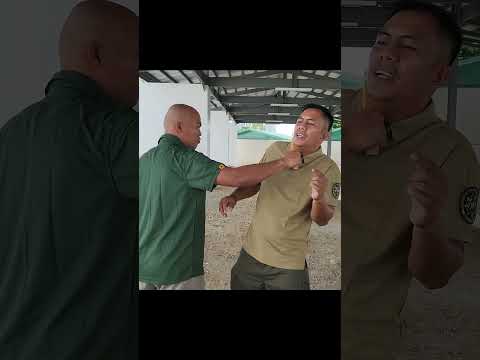
This video provides essential bleeding control techniques, emphasizing the importance of immediate action before professional medical help arrives. It details how to differentiate between life-threatening and non-life-threatening bleeds, and demonstrates direct pressure, wound packing with gauze or cloth, and the proper application of a tourniquet as a last resort for severe limb hemorrhages. The instruction comes from Doc AA, an orthopedic surgeon and Filipino martial arts practitioner.
Atienza Kali is presented as a modern martial discipline focused on distilled violence for self-defense, encompassing a spectrum of weapons from empty-handed to firearms. The annual 'Call of the Mountain' event serves as a gathering for instructors to install new techniques, conduct testing, and refine curriculum, with a recent theme of 'Mass Attack'. The discipline emphasizes realistic application and adaptation to real-world scenarios, drawing practitioners who often have prior martial arts experience and seek more effective solutions for violent encounters.
This YouTube video is the second part of a series on knife defense, as indicated by the title 'Knife Defense Part 2'. The description highlights the use of hashtags related to 'Rapid Realism Okali' and 'FMA' (Filipino Martial Arts). While the title and description do not explicitly mention firearms, the context of self-defense training, particularly with martial arts, can sometimes overlap with firearm retention and defense scenarios, especially in tactical training environments.
This guide details a knife defense technique from Rapido Realismo Kali, emphasizing an offensive mindset. The core principle is to 'foul' an attacker's draw by immediately pinning their weapon hand and striking before the knife is deployed. The technique focuses on controlling the weapon arm and transitioning to a takedown or full control, stressing the importance of pressure testing and an aggressive approach for effectiveness.
This episode of Gun Talk Nation features Rob Cabrera, a knife fighting expert, discussing the importance of knife skills in self-defense. Cabrera emphasizes that knife combat is about killing, not fighting, and highlights the need for practical deployment and understanding of range. He contrasts folding knives for utility with fixed blades for defense, stressing that proper training and mindset are more crucial than the specific tool. The discussion also touches on the value of martial arts backgrounds like Filipino Martial Arts, boxing, and Muay Thai for developing essential footwork and mechanics.
This video from Blades and Bullets, presented by G Spe and guests Sir Kayo Guro Gani and Guru Ipe, focuses on self-protection techniques, particularly against knife threats. Key principles include situational awareness, de-escalation, and the importance of a clear mind in a confrontation. The instructors demonstrate practical defensive maneuvers, emphasizing preemptive strikes and control techniques derived from Filipino Martial Arts.
This video explores the history and combat applications of the Kukri knife, focusing on its effectiveness as a chopping and cutting tool with secondary thrusting capabilities. The instructors highlight the unique design of the Kukri, its historical ties to the Gurkhas of Nepal, and its versatility as both a utility and defensive weapon. They demonstrate fundamental defensive techniques, emphasizing the integration of slashing and thrusting motions for enhanced combat effectiveness.
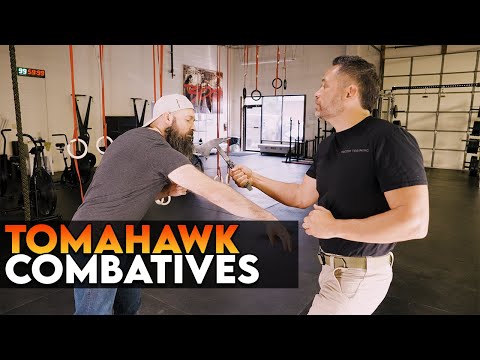
Jared Wihongi, a global edged weapons combatives expert, details the practical application of tomahawks as a close-quarters combat tool. Drawing from Filipino Martial Arts (Kali), he emphasizes a transferable methodology based on angles, timing, and distance management. The discussion covers various attack vectors, including angular strikes, linear thrusts, and the use of the spike and hook for control and damage, highlighting the tomahawk's versatility for cutting, puncturing, and blunt trauma.
This guide, based on insights from Mike Janich of Martial Blade Concepts and USCCA, details the 'defanging the snake' technique for knife self-defense. It emphasizes targeting the attacker's limbs, particularly the forearm's flexor muscles and tendons, to disarm them and create an opportunity to escape. The instruction highlights the legal considerations of using a knife as lethal force and contrasts its stopping power with that of firearms.
You've reached the end! 9 videos loaded.
Gun Laws by State
Read firearms regulations for all 50 states + D.C.
Find Gun Dealers
Search licensed FFL dealers near you.