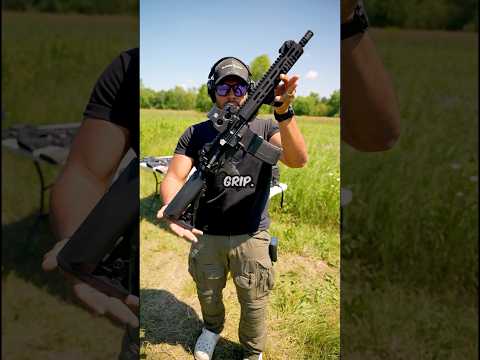
Colion Noir discusses the perceived obsolescence of pump shotguns, arguing they remain popular due to their physical and aggressive feel. He introduces the Mossberg 590R Chisel as an updated platform that retains the core experience while improving ergonomics, sights, and recoil management with an adjustable stock and recoil pad.
This video features a blind test comparing a high-end Beretta A400 shotgun against a more budget-friendly GForce Arms model. The test focuses on identifying the firearms solely by recoil and feel, highlighting the distinct operational differences between gas-operated and inertia-driven semi-automatic shotguns. The participant correctly identifies the Beretta due to its smoother action and perceived softer recoil.
The video advocates for Short Barreled Rifles (SBRs), highlighting their perceived superior handling and shooting feel compared to standard 16-inch barreled rifles. The speaker specifically mentions a Smith & Wesson 11.5-inch SBR with a flat trigger and B5 Systems furniture as an example of a firearm that "rocks their world."
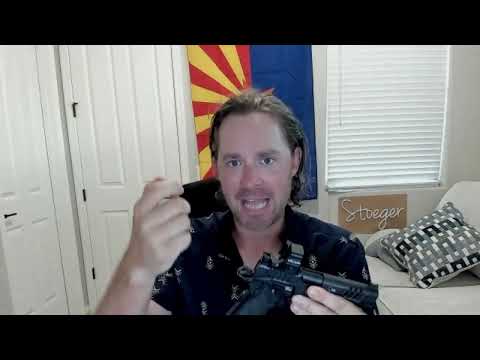
This video delves into the nuanced topic of handgun recoil impulse, moving beyond simple recoil spring weights. Instructors Joel and Ben Stoeger discuss how firearm design, slide reciprocation, and various components like springs, guide rods, and compensators influence the perceived feel of a gun. They differentiate between 'pushy' and 'snappy' recoil, offering advice for both new and experienced shooters on how to understand and potentially tune their firearms for preferred handling characteristics, emphasizing that personal preference and addressing specific issues should guide modifications.
This video features a review and shooting session of the Smith & Wesson CSX E-Series pistol and a Smith & Wesson Model 1950 revolver chambered in .44 Special. The host discusses the CSX's improved trigger and ergonomics compared to earlier models, highlighting its 1911-style features. He then delves into the historical significance and shooting characteristics of the rare N-Frame Model 1950 revolver, emphasizing its .44 Special chambering and desirable features like a 4-inch barrel.
This video provides a direct comparison between the Sig Sauer M18X and the Glock 45, both chambered in 9mm. The presenter, Yoki Sturrup, focuses on the subjective feel of each firearm in hand, trigger comfort, and observed recoil during range testing. While both pistols are noted for their similar weight and dimensions, the Sig M18X is favored for its superior trigger feel and overall comfort, despite a minor failure to fire incident with one of the firearms.
This video compares the Atlas Titan and Atlas Athena pistols, both high-end 2011 platforms. While many expect the shorter-barreled Athena to be superior for action shooting, the presenter finds the longer-barreled Titan feels flatter and softer, preferring its recoil impulse despite using softer domestic ammunition. The Athena, conversely, exhibits a pushier recoil.
This video discusses the feel and perceived value of a polymer handgun. The speaker notes that while the firearm has AR-like controls, its all-polymer construction makes it feel less substantial and cheaper than its price point suggests, despite its 8lb weight.
This review compares the Shadow Systems DR920P to a modified Glock 47, focusing on shooting feel, accuracy, and reliability. The reviewer finds the DR920P to have a snappier recoil impulse and be less accurate than the Glock 47. Significant reliability issues, including failures to go into battery and extract, are noted, leading to a recommendation against purchasing the Shadow Systems pistol.
Lead Firearms Instructor Joel Park explains that changing recoil springs is primarily about adjusting the *feel* of a firearm's recoil impulse, not necessarily its performance or reliability. He notes that while stock Walther PDPs can feel sharp, a lighter spring (like a 15lb ZR Tactical) can make them feel less snappy without affecting shot grouping. Conversely, he advises against altering springs if the firearm is already cycling reliably, unless addressing specific operational issues like a pistol failing to go fully into battery, as seen with a suppressed PDP.
Ben Stoeger explains why high-volume competitive shooters often avoid frequent recoil spring replacement. While springs do take a set and lighten over time, the primary reason for not changing them is to maintain a consistent feel of the firearm. Frequent changes can dramatically alter the recoil impulse, requiring an acclimation period that detracts from training focus and skill development. Stoeger emphasizes focusing on skill-building rather than equipment tinkering, especially when no actual issue is present.
Ben Stoeger emphasizes the critical importance of a tactile and audible thumb safety feel for rapid and intuitive disengagement during a draw stroke, particularly in single-action pistols used for competition. He contrasts this with safeties lacking positive feedback, which can hinder confidence and performance. The discussion highlights how aggressive firearm use makes subtle safety characteristics significant friction points.
Gun Laws by State
Read firearms regulations for all 50 states + D.C.
Find Gun Dealers
Search licensed FFL dealers near you.