TheYankeeMarshal argues that ported barrels on handguns offer negligible recoil reduction due to insufficient energy and short barrel length. He proposes objective testing using a Ransom Rest-like device to measure recoil and challenges manufacturers to provide empirical data supporting their claims. The video emphasizes that any perceived benefits are likely psychological and not worth potential accuracy compromises.
This video provides an in-depth look at the .45 ACP cartridge, exploring its historical significance, performance characteristics, and modern applications. It debunks myths about its recoil, highlights its effectiveness in various firearms like the 1911 and submachine guns, and discusses its suitability for reloading and specialized loads. The content emphasizes the cartridge's balance of power and control, making it a consistent choice for defense and combat.
This video discusses the Taurus Raging Hunter revolver chambered in .460 S&W Magnum. The speaker admits to previously withholding information about using specific ammunition types. The video highlights the ability of the .460 S&W Magnum to also fire .454 Casull and notes the difficulty in finding .360 S&W Magnum ammunition. A comparison of recoil between .454 Casull and .460 S&W Magnum is presented.
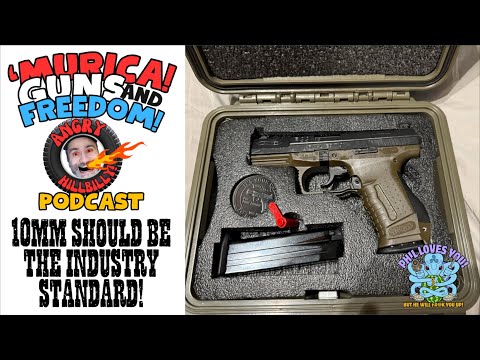
The speaker argues that 10mm Auto should be the industry standard caliber for handguns, citing its versatility and power. He suggests that firearms should be designed around 10mm and then downsized or adapted for .40 S&W and 9mm Luger, rather than the other way around. This approach, he believes, would offer better performance and flexibility, allowing for easier caliber conversions and potentially better handling characteristics across different calibers.
The Yankee Marshal discusses handgun caliber recoil, specifically addressing concerns about 10mm Auto for female shooters. He suggests that 10mm can be managed with lighter loadings and that 357 SIG offers slightly less recoil than 40 S&W. The discussion also touches on the importance of proper ammunition selection for managing recoil and ensuring effective self-defense.
This video discusses the practical implications of red dot optic window sizes on handguns. The speaker argues that while window size differences exist between optics like the Trijicon RMR Type 2 and RCR, they are often less critical than proper shooting technique. Solid fundamentals and training are emphasized as key to not losing the dot, with larger windows primarily offering a margin of error for presentation and compromised shooting positions.
This YouTube video focuses on the Glock 29, specifically examining its recoil up close. The title indicates a detailed look at the shooting experience of this 10mm pistol, suggesting the content will appeal to those interested in the practical aspects of firearms, particularly the handling of powerful calibers. The description also includes a music attribution, which is standard for many YouTube creators.
This video delves into the nuanced topic of handgun recoil impulse, moving beyond simple recoil spring weights. Instructors Joel and Ben Stoeger discuss how firearm design, slide reciprocation, and various components like springs, guide rods, and compensators influence the perceived feel of a gun. They differentiate between 'pushy' and 'snappy' recoil, offering advice for both new and experienced shooters on how to understand and potentially tune their firearms for preferred handling characteristics, emphasizing that personal preference and addressing specific issues should guide modifications.
This video discusses the resurgence of the 2011 platform, highlighting its performance advantages over traditional striker-fired pistols. The speaker, with decades of experience, emphasizes the 2011's tight tolerances, excellent trigger, and manageable recoil impulse, comparing it to a 'Ferrari' of handguns. While acknowledging its need for careful maintenance, the video suggests the 2011 offers superior shooting dynamics for those willing to learn its nuances.
This video provides a practical demonstration of recoil across three distinct firearms: a 9mm handgun, a Nemo Arms FX rifle, and a Raptor 50 BMG rifle. The presenter, exhibiting experienced firearm handling, offers subjective comparisons for felt recoil, noting how proper technique significantly mitigates perceived force, even on powerful calibers like .50 BMG. The content also briefly promotes firearms technology education.
Hickok45 reviews the classic Smith & Wesson Model 27, a .357 Magnum revolver introduced in 1935. He discusses its historical significance as the 'Registered Magnum' and its role in popularizing magnum cartridges. The video covers the firearm's weight, handling characteristics, and the difference in recoil between .38 Special and .357 Magnum loads, emphasizing the importance of starting new shooters with lighter calibers to foster enjoyment and prevent aversion to firearms.
This video from Johnny Q demonstrates and explains why shooting a pistol sideways, often called 'gangster style,' is not a practical or effective technique. The instructor, an experienced shooter, visually confirms that recoil still moves upwards relative to the slide, even when the firearm is held horizontally. He strongly advises against this method for any serious application, labeling it as impractical.
Gun Laws by State
Read firearms regulations for all 50 states + D.C.
Find Gun Dealers
Search licensed FFL dealers near you.