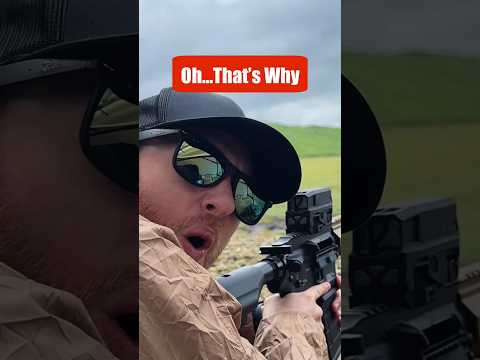
This video explores the intriguing question of whether a human can physically silence a firearm. While no specific firearms or calibers are mentioned in the title or description, the core concept suggests a discussion around firearm acoustics, noise reduction, or perhaps even a theoretical exploration of dampening gunshot sounds. The content likely delves into the physics and practicalities of reducing firearm noise, potentially touching upon topics like sound suppressors or unconventional methods of noise mitigation. It's a topic that could appeal to firearm enthusiasts interested in the technical aspects of shooting and firearm technology.
This video explores the phenomenon of exploding ammunition when fired at supersonic speeds. It delves into the science and potential consequences of such an event, likely featuring visual demonstrations and explanations of the physics involved in ammunition failure at high velocities. The content aims to educate viewers on the extreme effects of supersonic ammunition under specific, likely destructive, conditions.
This YouTube Shorts video, titled "Barrel Lengths Does Size Really Matter," likely explores the practical implications of different firearm barrel lengths. Given the title and the mention of related channels like "Classic Firearms," "Outside The Warehouse," and a podcast channel, the content is expected to delve into how barrel length affects firearm performance, handling, and suitability for various applications. The hashtags suggest a focus on informative, short-form content for firearm enthusiasts.
This YouTube Shorts video, titled "Why Does It Go Backwards?", likely explores a mechanical or functional aspect of a firearm where a component or action moves in reverse. Without a transcript, the exact firearm or mechanism is unknown, but the title suggests an investigation into a specific operational characteristic. The content aims to pique viewer curiosity about firearm mechanics.
This short YouTube video aims to explain the concept of Hydrostatic Shock, a term often used in discussions about firearm ballistics and terminal performance. While the video doesn't specify particular firearms or calibers, the topic itself is directly relevant to ballistics, projectile physics, and the effects of ammunition upon impact. It likely delves into the physics behind how a projectile's energy transfer causes tissue damage beyond the direct wound channel, a key consideration for self-defense and hunting applications.
This video explores the destructive capabilities of a .22 caliber bullet by testing its impact on a cinderblock. The description poses a direct question about whether the cinderblock will withstand the projectile, indicating a focus on ballistics and the effectiveness of small caliber rounds against common building materials. The provided hashtags suggest the content will appeal to those interested in firearms, shooting dynamics, and general gun science.
This video explains the methodology and process used to test and determine the exact loudness of a gunshot. It focuses on the 'how-to' aspect of measuring firearm sound levels, presumably involving specialized equipment and procedures.
This YouTube Short features "Jeff Mau the science guy" as he and a staff member take apart ammunition to demonstrate how it works. The description encourages viewers to "go to the Gemba" and "light stuff on fire," implying a hands-on, experimental approach to understanding the components and function of ammunition. The video aims to provide an educational yet engaging look at the science behind bullets.
This YouTube video delves into the practical implications of firearm porting, specifically investigating its effect on bullet velocity. The description highlights that the results from range testing may be surprising to viewers and encourages audience interaction in the comments. The video also promotes the channel's Instagram, a custom gun wall product with a discount code, in-ear hearing protection, and a Patreon page for support.
This video tests the effectiveness of suppressing a .50 caliber Barrett M107 rifle. While suppressors significantly reduce sound and muzzle flash, they notably increase felt recoil due to the removal of the rifle's integrated muzzle brake. The CGS suppressor is highlighted for its advanced design, offering impressive sound reduction even at long distances, though it can introduce cycling issues.
This YouTube Short explores the fascinating phenomenon of two full-automatic firearms exhibiting different rates of fire. The title directly poses the question of why this difference exists, hinting at a comparative analysis of the firearms or their mechanisms. The video likely demonstrates the sound of each full-auto, highlighting the audible distinction in their cyclic rates, and aims to provide an explanation for this divergence, possibly related to internal mechanics, specific model variations, or ammunition. The hashtags suggest a general interest in firearms and engagement.
This video details an experimental test to determine the potential damage of firing unprotected steel shot through a non-steel-proofed shotgun barrel. The experiment involved using home-loaded steel cartridges without protective wadding and firing them through a volunteer firearm. The results indicated minimal to no visible damage to the barrel, challenging common assumptions about the destructive potential of steel shot in such firearms.
Gun Laws by State
Read firearms regulations for all 50 states + D.C.
Find Gun Dealers
Search licensed FFL dealers near you.