This video explores the effectiveness and drawbacks of suppressing auto rifles, specifically AR-15 platforms, by testing accuracy, back pressure, heat mitigation, flash signature, and sound suppression. It highlights how suppressors can impact accuracy due to increased heat and mirage, increase back pressure leading to fouling and potential health concerns, and significantly alter thermal and IR signatures. The analysis suggests that while suppressors offer benefits like flash reduction, their use on auto rifles requires careful consideration of the specific suppressor technology and operational context.
This video provides an expert assessment of the Mk18's relevance in 2026, detailing its pros and cons. The speaker, demonstrating experienced knowledge, discusses critical factors like velocity, fragmentation range, dwell time, and effective range limitations. Recommendations are made for optimizing performance and considering alternative barrel lengths for specific needs.
This video provides an in-depth review of the AAC Pindrop XL, an all-carbon fiber suppressor. It details tests for heat resistance, cold weather durability, accuracy impact, and flash signature reduction. The presenter highlights the suppressor's lightweight nature and perceptibly quieter performance compared to other options, while also discussing material limitations and potential improvements.
This video discusses the tradeoffs of using 12-gauge Dragon's Breath ammunition for self-defense. While it can be used, it significantly reduces the number of projectiles (e.g., only six buckshot pellets compared to 9-12 in traditional rounds) and creates a large flash signature, posing a fire hazard to the surroundings.
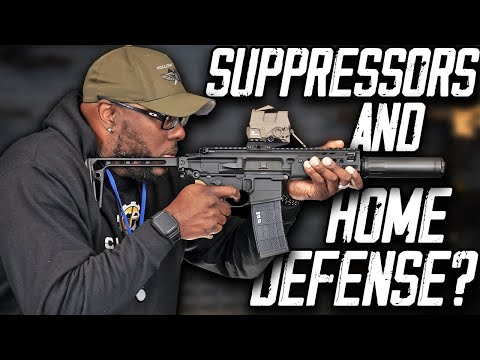
This video explores the pros and cons of using a suppressor for home defense. It details how suppressors reduce flash and noise, aiding in communication and reducing disorientation. However, it also highlights drawbacks like increased firearm length, potential reliability issues, and the need for specific ammunition or accessories like boosters for handguns. The decision is presented as subjective, depending on individual circumstances and preferences.
The Surefire SOCOM 556 RC3 is a low back pressure suppressor designed for durability and good flash mitigation. While not the lightest or quietest option, it excels in ruggedness and reliable function on various platforms, including non-adjustable gas systems. It requires Surefire muzzle devices for attachment, with the Open Flash Hider recommended for optimal performance.
This video compares three suppressors: Surefire RC3, SilencerCo Velos 5.56, and BNT Print XH, focusing on their signature reduction (flash and sound) and back pressure characteristics. The presenters highlight how flow-through or reduced back pressure designs significantly mitigate gas blowback into the action and face, leading to a cleaner shooting experience and potentially less recoil. They demonstrate flash reduction capabilities and discuss the implications for firearm operation and maintenance.
This video provides an assessment of the Griffin MK2 firearm, focusing on its performance with a suppressor. Key observations include a positive safety selector click, effective last-round bolt hold-open, and a well-balanced gas system that minimizes gas blowback to the face. The suppressor is noted for its effectiveness in reducing sound and flash, even on a 30 caliber platform, and its versatility across different calibers like 6.5 Grendel.
This review of the Dead Air Sandman X 30 cal suppressor focuses on its performance as a low back pressure (LBP) system. The presenter, Eric, highlights its effectiveness in reducing gas blowback and wear on firearm components, while also addressing its surprisingly low signature (flash and heat) compared to other LBP designs. The review covers technical specifications, material, mounting options, and extensive real-world testing across multiple calibers, offering a comprehensive look at its capabilities for prepared citizens and tactical applications.
This video discusses the benefits of muzzle devices, specifically suppressors versus muzzle brakes, for improving firearm performance and the shooting experience. The speaker, identified as a 'can guy,' emphasizes that suppressors can significantly reduce recoil and flash, leading to quicker target reacquisition and an overall better shooting experience. However, it's crucial to ensure the suppressor positively impacts the firearm's harmonics and gas system, potentially requiring tuning or an adjustable gas block. For those not opting for a suppressor, devices like four-prong or three-prong muzzle devices are recommended for flash and gas dissipation.
This video demonstrates the effectiveness of a suppressor in reducing muzzle flash under night vision conditions. The instructor explains that direct blowback firearms, common in .22LR platforms, inherently produce more flash from the ejection port due to their operating mechanism. The test focuses on comparing the suppressed and unsuppressed flash signatures at both the muzzle and ejection port.
This video contrasts two AR-15 muzzle devices. A standard bird cage flash hider from Diamondback Firearms is shown, with its primary purpose being flash signature reduction, not recoil mitigation. A Precision Armament muzzle brake is then presented as a device specifically engineered for recoil reduction, featuring four stacked deflectors.
Gun Laws by State
Read firearms regulations for all 50 states + D.C.
Find Gun Dealers
Search licensed FFL dealers near you.