
Videos tagged with Flinching

This video demonstrates three essential firearm training drills: the Ball and Dummy drill to identify and correct flinching, the White Paper drill to build trust in sight alignment and trigger control without a defined target, and one-handed shooting drills to prepare for scenarios where a support hand may be injured or unavailable. The instructor emphasizes controlled trigger presses, proper grip, and consistent sight alignment across all drills.

This video by John G. Johnson, a firearms instructor, addresses the common problem of flinching, which he states affects 99% of shooters and kills accuracy. He defines flinching as an involuntary movement to fight recoil, often by pushing the gun down, causing shots to go low. Johnson introduces the 'Ball and Dummy Drill' as a method to identify and correct this issue by having a partner load magazines with a mix of live rounds and dummy rounds.


John G. Johnson, a firearms training instructor, details how dry-fire practice is essential for improving pistol accuracy. He emphasizes the importance of a smooth trigger press, controlled breathing, and avoiding the common mistakes of blinking and anticipation. The video introduces the HTS Dryfire Bullet Insert as a tool to facilitate safe and effective dry-fire training, allowing shooters to practice trigger travel without the slide locking back.
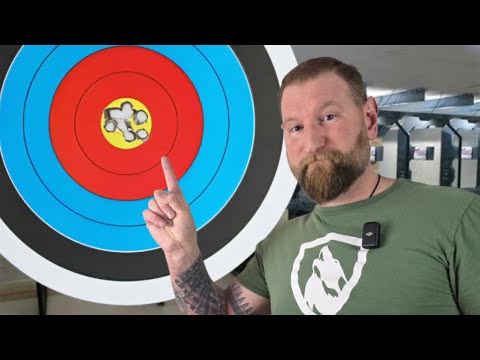

This guide details the 'Pause Drill,' a fundamental training exercise for new shooters, as demonstrated by John G. Johnson. The drill emphasizes slowing down the shooting process to build a solid foundation in grip, trigger control, and sight alignment, directly combating the common accuracy killer of rushing shots. Instruction includes proper grip mechanics, trigger press technique, and stance for recoil management.

This video by John G. Johnson, a firearms instructor, addresses the common issue of flinching in pistol shooting. He explains that flinching is an internal reaction to recoil and can be mitigated through a proper grip. The guide details how to achieve a 360-degree grip with balanced pressure between hands, emphasizing the use of pectoral muscles for driving the pistol out straight and the importance of a controlled trigger press with the fingertip. This technique aims to significantly improve pistol accuracy for shooters of all levels.

