This video details a 500-round reliability test of a used Glock 17 Gen 3, formerly owned by a police officer. The test highlights the firearm's performance with various magazines, noting a single failure-to-feed malfunction and intermittent slide lock-back issues with non-Glock magazines. The reviewer also discusses ergonomic considerations, trigger feel, and potential aftermarket upgrades for this popular pistol.
This video argues that Glocks are overpriced and ergonomically inferior to many modern handguns. The presenter highlights several alternatives that offer features like direct optic mounts, better triggers, and more comfortable grips at lower price points. The video also criticizes the extensive aftermarket modifications often required to make Glocks competitive, suggesting that many "Glock copies" are superior out of the box.
This video critically examines seven shortcomings of Glock pistols, despite their popularity as duty and carry firearms. The presenter, a firearms instructor with extensive experience, details issues ranging from the unique grip angle and ergonomics that can lead to poor shooting fundamentals, to the difficulty in cleaning magazines and the unreliability of the MOS optic mounting system. It also covers the 'Glock knuckle' phenomenon, the lack of a built-in safe holstering mechanism, subpar stock triggers and sights, and limitations in tuning recoil behavior. While acknowledging Glock's reliability and ease of maintenance, the video argues these flaws necessitate workarounds or aftermarket solutions for optimal performance and safety.
This video provides a critical analysis of Glock's current market position, contrasting its historical innovation with its recent perceived stagnation. The speaker highlights Glock's foundational impact on the firearms industry with the introduction of the polymer-framed, striker-fired pistol but questions the company's ability to adapt to modern market demands for enhanced ergonomics and features. It suggests that while Glock remains reliable, competitors are now offering more innovative solutions, potentially impacting Glock's future relevance.
This video explores common complaints and criticisms leveled against Glock firearms. As a dominant force in the handgun market, Glocks often face scrutiny regarding aesthetics, ergonomics, and specific operational aspects. The content aims to delve into these recurring issues, providing a platform for discussion and potentially offering counterpoints or explanations for why these firearms remain so popular despite the criticisms.
This review of the Glock 19 Gen 5 highlights the removal of finger grooves and its impact on natural point of aim, noting a tendency for the pistol to point higher. The reviewer, a self-proclaimed Gen 3 fanboy, discusses the ambidextrous slide stop, the grip texture, and the dissatisfaction with factory sights, planning to replace them with Trijicon HDs. Initial shooting impressions indicate a tendency to shoot left, attributed possibly to sights or trigger control, but the reviewer expresses optimism about adapting to the platform.
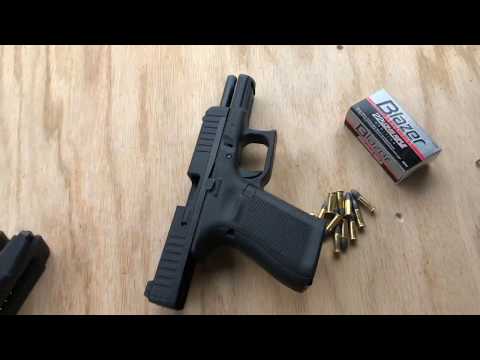
This video provides an in-depth review of the Glock 44 chambered in .22LR. The hosts discuss its delayed release, ergonomics, and suitability for various roles including training, bug-out kits, and recreational shooting. They compare it to other .22LR pistols and highlight its strengths and weaknesses, particularly regarding magazine capacity and the lack of a threaded barrel out of the box. The review emphasizes its Glock-like handling and potential as an affordable training tool.
This video introduces the Glock 44, a .22 LR pistol designed to replicate the feel and ergonomics of centerfire Glocks like the G19. It highlights the Glock 44's value as a training tool due to its low recoil and affordable ammunition, enabling high-volume practice for fundamental skills such as grip, sight alignment, and trigger control. The discussion also touches on the importance of finding reliable .22 LR ammunition for consistent performance.
John Hickok provides an experience-based overview of the Glock 21 Gen 4, focusing on its .45 ACP caliber, polymer frame, and Gen 4 enhancements like the dual recoil spring and interchangeable backstraps. He discusses practical aspects including recoil characteristics, magazine loading challenges, and the utility of aftermarket sights and lasers, ultimately positioning the Glock 21 Gen 4 as a capable home defense option. His insights stem from extensive shooting experience and a deep understanding of handgun design.
This deep dive review of the Glock 43, conducted over six months of extensive carry and range time, highlights its reliability, surprising shootability for a subcompact, and improved ergonomics compared to standard Glocks. The reviewer emphasizes its suitability as a versatile concealed carry pistol, capable of being both a pocket and inside-the-waistband option, while also addressing common concerns like limp wristing and capacity.
This guide synthesizes expert insights from Iraqveteran8888's review of the Glock 42. It covers the pistol's design for defensive use, its .380 ACP caliber suitability for concealed carry, and practical considerations like grip ergonomics and potential malfunctions. The review emphasizes the importance of carrying a firearm consistently, even in a smaller caliber, for effective self-defense.
You've reached the end! 11 videos loaded.
Gun Laws by State
Read firearms regulations for all 50 states + D.C.
Find Gun Dealers
Search licensed FFL dealers near you.