This review provides an in-depth analysis of the Glock 17 Gen 6, highlighting its ergonomic improvements and shooting performance. The speaker, with a high level of authority derived from extensive experience including competitive shooting, details generational changes and compares the Gen 6 to other major platforms. Key takeaways include the natural pointing characteristics due to the revised grip, optimized texture, and improved controls, making it a strong contender in the modern handgun market.
This review from The Gun Dungeon provides an expert assessment of the Glock Gen 6, focusing on its updated ergonomics and trigger system. The host, demonstrating high authority and expertise, details changes in grip texture, palm swell, and the flat-faced trigger, offering candid opinions on their effectiveness for shooting and concealed carry. The review concludes with a value proposition for upgrading from previous generations.
This video critiques Glock's decision to discontinue combat and duty-rated handguns for the civilian market by November 30th, 2025. The speaker argues this move aligns Glock with anti-gun legislation and regulatory bodies like the ATF, calling it 'capitulation' rather than innovation. The content also criticizes gun tuber James Reeves for defending Glock's decision, suggesting it's driven by sponsorships rather than principle.
Ian McCollum of Forgotten Weapons provides an in-depth look at the Glock 26, Glock's inaugural sub-compact pistol. The video details its historical context, design evolution across generations, and unique mechanical features, highlighting its significance in the concealed carry market and its adaptation to US firearm regulations. McCollum's extensive knowledge offers a comprehensive understanding of this influential firearm.
This video analyzes the evolution of Glock pistols, focusing on generations and variations to determine the 'best' Glock. The speaker concludes that the Glock 19 Gen 3 is the optimal choice due to its balance of concealability, carriability, and suitability as a duty pistol, while acknowledging the inherent similarities across most Glock models.
This video provides an in-depth look at the Glock 19 Gen 2, highlighting its significance as the beginning of the compact Glock legend. The presenter, with apparent familiarity with Glocks, details its features, compares it to later generations, and discusses its historical context and continued relevance for self-defense and concealed carry. The video also covers basic disassembly and internal differences across Glock generations.
This guide details the field stripping process for the Glock Model 20 Gen 5, as demonstrated by Sootch00. It emphasizes safety checks and provides steps for disassembly and reassembly, crucial for maintenance and understanding the firearm's mechanics. Sootch00, an experienced reviewer, highlights the importance of proper handling and inspection for this 10mm pistol.
This guide, presented by Lenny Magill, founder of GlockStore, details how to differentiate between Glock Gen 3 and Gen 5 models. Key identification points include slide markings, the presence of an MOS plate, magazine follower color, frame pin configuration, slide stop lever design, and striker tip shape. Understanding these differences is crucial for proper firearm identification and accessory compatibility.
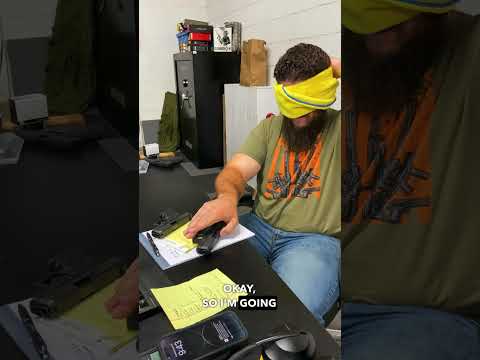
This video presents a training drill where Jarod attempts to differentiate between a Glock 26 (9x19mm) and a Glock 28 (.380 Auto) while blindfolded. The challenge highlights the subtle differences between these visually similar subcompact Glocks, emphasizing their distinct calibers as the primary differentiator. Despite the instructor's high authority, Jarod incorrectly identifies both models, failing the challenge.
This video focuses on comparing different Glock generations, highlighting their differences and nuances. The description indicates a broader scope for the channel, promising content on various handguns, rifles, and firearms in general, including specific models like the Glock 19 and Glock 17, as well as calibers such as 9mm and .40 Cal. The channel aims to inform viewers about firearms, covering topics like best handguns, budget guns, and assault rifles.
The video compares the Glock Gen 3 and Gen 5, highlighting the Gen 5's OEM Performance Trigger as a significant advantage due to its crisp reset and predictable 4-4.5 pound pull, making it ideal for self-defense. While acknowledging the Gen 3's proven reliability and familiarity, the Gen 5's trigger offers a more refined shooting experience without compromising safety for everyday carry.
This video provides a comprehensive overview of the evolution of Glock pistol generations, from the foundational Gen 1 to the advanced Gen 5. It details key design changes, feature introductions, and model variations across each generation, highlighting Glock's commitment to innovation and user feedback. The content is suitable for beginners seeking to understand the historical development and distinguishing characteristics of Glock firearms.
Gun Laws by State
Read firearms regulations for all 50 states + D.C.
Find Gun Dealers
Search licensed FFL dealers near you.